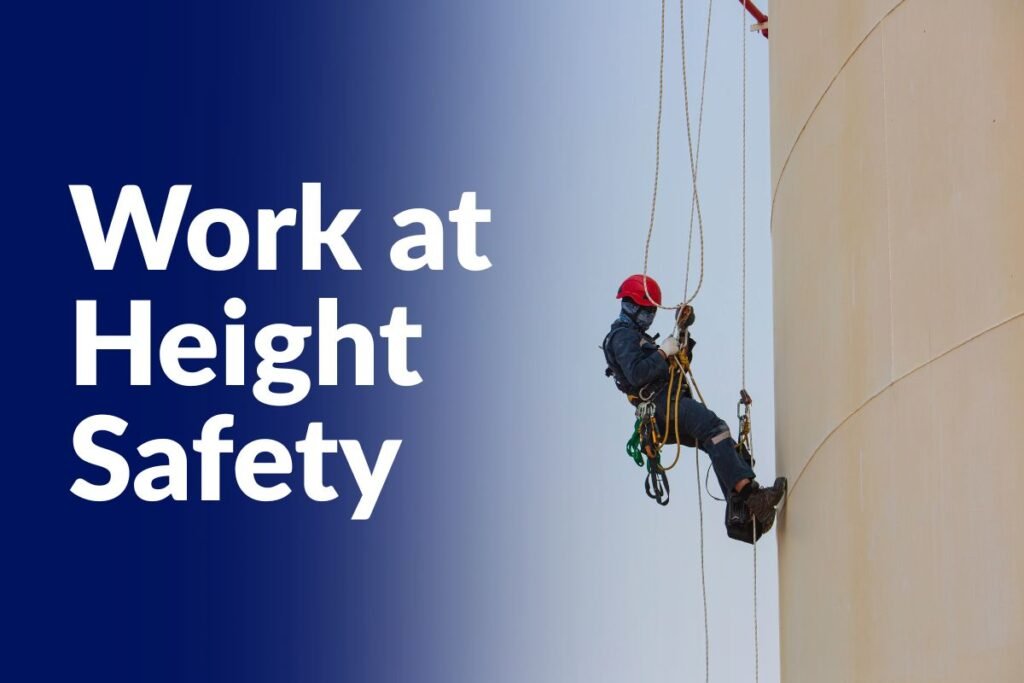
Falls from height are one of the most serious dangers on any site. One slip from a scaffold, one missing guardrail, or one unclipped hook can change a life in seconds.
The good news is that these falls are largely preventable. With the right planning, equipment, and habits, you can do your job and still go home safe.
This guide is based on a work at height safety toolbox talk. It covers the hazards, safety measures, PPE, safe work procedure, key points, and do’s and don’ts, in simple language you can use on site.
Work Safe at Height, Come Back Safe.
What Is Work at Height?
Work at height means any work where a person could fall and get hurt. That includes roofs, scaffolds, ladders, towers, platforms, and the edges of open floors or excavations.
You don’t have to be very high to be in danger. A fall from a ladder or a low platform can still cause serious injury. So treat every work at height task with respect.
1. Hazards (Risks)
Before you climb, know what can go wrong. These are the main hazards of working at height.
- Fall from height: The biggest risk, and the cause of many serious injuries
- Slipping or tripping: Wet, oily, or cluttered surfaces make this more likely
- Falling tools or materials: Objects dropped from above can injure people below
- Weak or damaged platforms, ladders, or scaffolds: Faulty equipment can fail under load
- Adverse weather: Strong wind and rain make surfaces slippery and loads unstable
- Contact with overhead power lines: A serious shock risk, especially with metal tools and ladders
- Collapse of temporary structures: Poorly built or overloaded scaffolds and platforms can collapse
Spotting these hazards before you start is the first step to controlling them.
2. Safety Measures
These measures help you control the hazards above.
- Take a Work at Height Permit before starting. The permit confirms that risks have been checked and controls are in place.
- Use a full body harness with a double lanyard. This lets you stay connected while moving.
- Connect to a suitable and strong anchorage point. A weak anchor can fail when you need it most.
- Use safe access. Choose scaffolding, a proper ladder, or a manlift, depending on the job.
- Barricade the area below the work. This keeps people away from falling objects.
- Keep tools and materials secured. Use tool bags and lanyards so nothing drops.
- Stop work during bad weather. High wind and rain make work at height unsafe.
- Make sure a competent person supervises. Someone trained should oversee the job.
- Maintain good housekeeping. A tidy work area reduces trips and slips.
3. Personal Protective Equipment (PPE)
PPE is your last line of defence. Use the right gear, and check it before every use.
| PPE | Why You Need It |
|---|---|
| Full body harness | Holds you safely if you fall, spreading the force across your body |
| Double lanyard | Lets you stay connected to an anchorage while moving between points |
| Safety helmet with chin strap | Protects your head, and the strap keeps it on if you fall or lean |
| Anti-slip safety shoes | Give you better grip on ladders, scaffolds, and wet surfaces |
| Hand gloves | Protect your hands and improve grip on rails and tools |
| Reflective jacket | Keeps you visible to others on site |
| Lifeline / anchorage system | Provides a secure point to connect your harness |
How the Fall Protection System Works
A simple fall protection set-up has three main parts that work together.
- Anchorage point: A strong, secure point that can support a fall
- Full body harness: Worn correctly by the worker
- Double lanyard: Connects the harness to the anchorage point
If any one of these is missing, damaged, or used incorrectly, the whole system can fail. Always make sure the anchorage is suitable, and ask a competent person if you’re unsure.
4. Safe Work Procedure
Follow these steps every time you work at height.
- Only trained and authorized persons should work at height.
- Use proper access. Scaffold, ladder, or manlift, as appropriate.
- Inspect all PPE and equipment before use. Look for cuts, fraying, damage, and missing parts.
- Connect your harness to an approved anchorage point.
- Barricade the area below and make sure no one enters it.
- Keep tools in a tool bag and secure them.
- Maintain communication with your team.
- If an emergency happens, use the rescue plan.
A rescue plan matters more than many people think. A person hanging in a harness after a fall can get into serious trouble quickly. So have the rescue arrangements ready before work starts, not after.
5. Key Points to Remember
If you remember nothing else, remember these.
- Always use a full body harness.
- 100% tie-off to a strong anchorage. This means staying connected at all times when there’s a fall risk, including while you move.
- Don’t work alone at height.
- Use guardrails, safety nets, and lifelines.
- Keep the work area clean and secure.
- Follow the permit to work and site safety rules.
- Report unsafe conditions immediately.
6. Do’s and Don’ts
Do’s
- ✔ Use approved PPE
- ✔ Inspect equipment daily
- ✔ Follow the Work at Height Permit
- ✔ Keep tools secured
- ✔ Maintain barricading
- ✔ Work in safe weather conditions
- ✔ Report unsafe conditions
Don’ts
- ✖ Don’t work without a harness
- ✖ Don’t use damaged PPE
- ✖ Don’t climb on unsafe structures
- ✖ Don’t throw tools or materials
- ✖ Don’t work in bad weather
- ✖ Don’t remove guardrails or safety nets
Quick Pre-Work Checklist
Run through this before you start.
- Do you have a valid work at height permit?
- Are you trained and authorized for this task?
- Is your harness, lanyard, and other PPE in good condition?
- Is the anchorage point strong and approved?
- Is the scaffold, ladder, or platform safe and inspected?
- Is the area below barricaded?
- Are tools and materials secured?
- Is the weather safe to work in?
- Is a competent person supervising?
- Is the rescue plan ready, and does everyone know it?
If the answer to any of these is “no,” stop and fix it before you climb.
Common Mistakes to Avoid
- Skipping the permit because the job looks “quick”
- Wearing a harness but not clipping on
- Clipping to a weak or unsuitable point
- Ignoring damage on PPE or ladders
- Leaving tools loose on platforms
- Removing guardrails or safety nets “for a moment”
- Working in strong wind or rain
- Working alone with no one aware of the task
- Having no rescue plan
- Not reporting hazards you notice
Discussion Questions for a Toolbox Talk
If you’re running this as a toolbox talk, use these to get the team involved.
- What work at height tasks do we do on this site?
- What are the biggest fall hazards in our area today?
- Where are our approved anchorage points?
- How do we check our harness and lanyard before use?
- What would we do if someone fell and was left hanging?
- Who is the competent person supervising today?
Final Thoughts
Work at height doesn’t have to end in injury. With the right permit, the right equipment, a competent supervisor, and good habits, you can control the risks.
Check your gear, tie off every time, keep the area below clear, and speak up when something looks wrong. Your life depends on those small steps.
Safe Work at Height Saves Lives.
Frequently Asked Questions
It’s any work where someone could fall and be injured. This includes roofs, scaffolds, ladders, platforms, and open edges.
It’s a permit that confirms the risks have been assessed and the controls are in place before work begins. Follow your site’s permit system.
It means staying connected to a secure anchorage at all times when there is a risk of falling, including while moving from one point to another.
A double lanyard lets you keep one hook attached while you move the other, so you stay connected as you move.
The strap keeps the helmet on your head if you slip, bend over, or fall, so your head stays protected.
If something goes wrong, you may need immediate help or rescue. Someone nearby can raise the alarm and act quickly.
No. Strong wind and rain increase the chance of slips and unstable loads. Stop work until conditions are safe.
Stop, keep others clear if needed, and report it immediately to your supervisor or safety officer.
Yes. Only trained and authorized people should work at height, and training should match the equipment and tasks involved.