PPE Full Form and Types: The Complete Guide
You’ve probably heard the term PPE thrown around at work, in labs, or on construction sites. But do you actually know what it stands for?
Let’s break down the ppe full form and types in a way that’s simple and genuinely useful.
What Does PPE Actually Stand For and Mean?
PPE stands for Personal Protective Equipment. It’s basically any gear designed to protect you from workplace hazards.
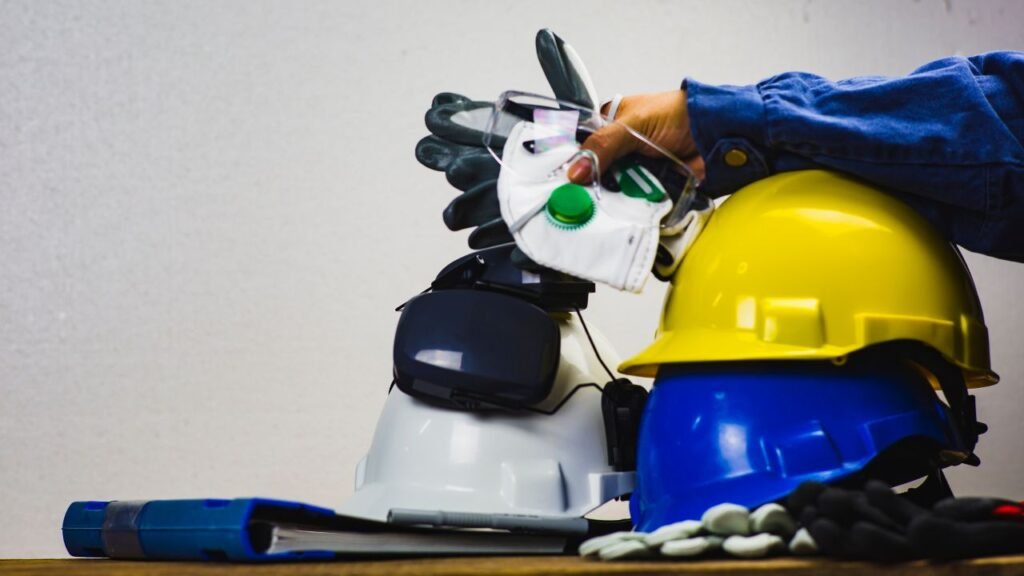
Think helmets, gloves, goggles, or even full-body suits. Anything that shields you from harm counts as PPE.
The goal is simple: keep you safe while you work. It doesn’t remove risks, but it reduces your exposure to them significantly.
Understanding the ppe full form and types is your first step toward staying safe. Once you know what PPE means, spotting the right gear gets easier.
Breaking Down the 7 Major Categories of PPE
Now let’s get into the fun part: the actual types of PPE you’ll encounter.
First, there’s head protection, like helmets and hard hats. These guard against falling objects and impact injuries.
Second, eye and face protection includes goggles, face shields, and safety glasses. You’ll need these around chemicals, sparks, or flying debris.
Third, hearing protection covers earplugs and earmuffs. Loud machinery and equipment make this category essential in many industries.
Fourth, respiratory protection includes masks and respirators. These protect your lungs from dust, fumes, or harmful particles.
Fifth, hand protection means gloves, of course. Different materials protect against cuts, chemicals, heat, or electrical hazards.
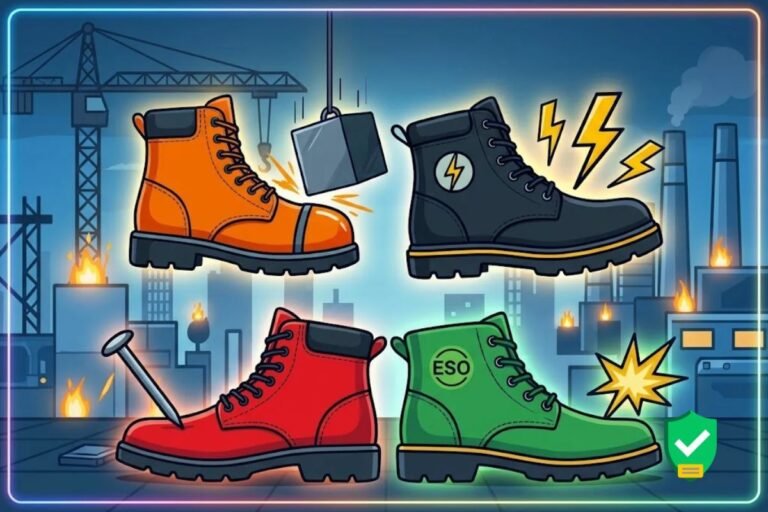
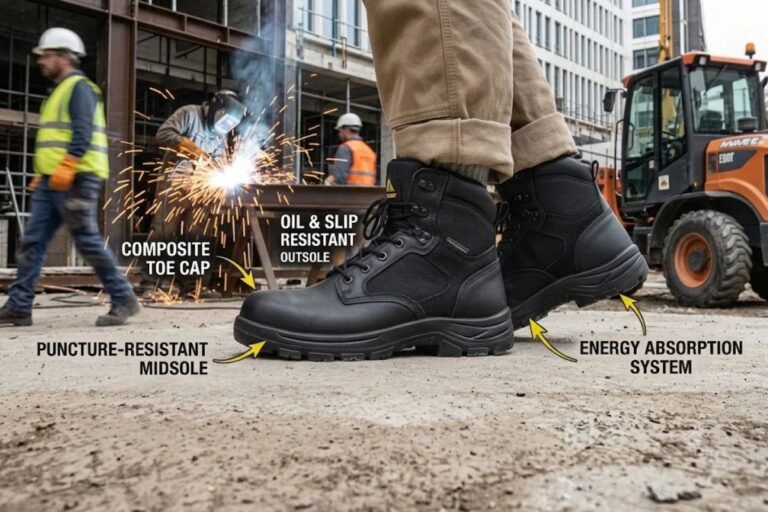
Sixth, foot protection includes safety boots and shoes. These shield your feet from heavy objects or slippery surfaces.
Seventh, body protection covers coveralls, aprons, and harnesses. This category protects your torso and limbs from various hazards.
Knowing these seven categories makes the ppe full form and types much easier to remember.
Industry-Specific PPE Requirements Explained
Not every job needs the same type of gear. Your PPE requirements depend heavily on your specific industry and role.
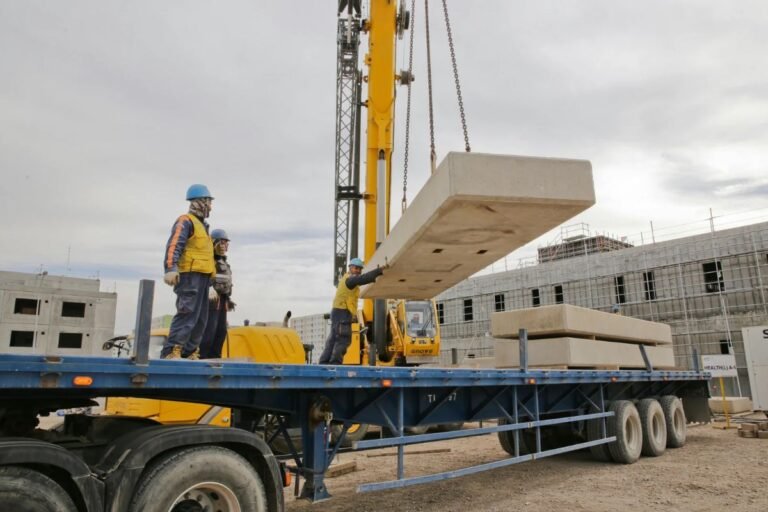
Construction workers rely heavily on helmets, boots, and high-visibility vests. Falling debris and heavy machinery make these essentials, not options.
Healthcare workers need masks, gloves, and sometimes full protective gowns. Infection control is their biggest priority every single day.
Chemical plant workers require specialized suits and respiratory protection. Exposure to hazardous substances demands much stricter safety standards.
Lab technicians typically wear goggles, gloves, and lab coats. Protecting against spills and chemical splashes is their main concern.
Electricians need insulated gloves and non-conductive footwear. Preventing electrical shocks is obviously their top safety priority.
Each industry tailors its PPE based on real, everyday risks. Understanding your industry’s needs helps you choose gear correctly.
Common Mistakes People Make Choosing PPE
Even with good intentions, people often get PPE selection wrong. Let’s look at a few common slip-ups you should avoid.
One big mistake is choosing PPE based on price alone. Cheaper isn’t always safer, and quality really does matter here.
Another mistake is ignoring proper fit. Ill-fitting gloves or helmets can actually increase your risk instead of reducing it.
Some people skip PPE entirely for “quick tasks.” Injuries often happen during these supposedly harmless, short moments.
Others forget to check expiration dates or wear and tear. Damaged PPE offers far less protection than you’d expect.
A surprisingly common mistake is using the wrong PPE type altogether. Not all gloves protect against chemicals, and not all masks filter fine particles.
Lastly, many skip proper training on how to use PPE correctly. Even the best gear fails if you don’t wear it properly.
Avoiding these mistakes ensures your safety gear actually does its job.
Understanding the PPE full form and types isn’t just useful knowledge, it’s genuinely protective. Once you know your categories, requirements, and common pitfalls, you’re already safer at work. So next time someone mentions PPE, you’ll know exactly what they mean, and why it matters.
Top 10 Safety Equipment (PPE) Every Worker Must Know
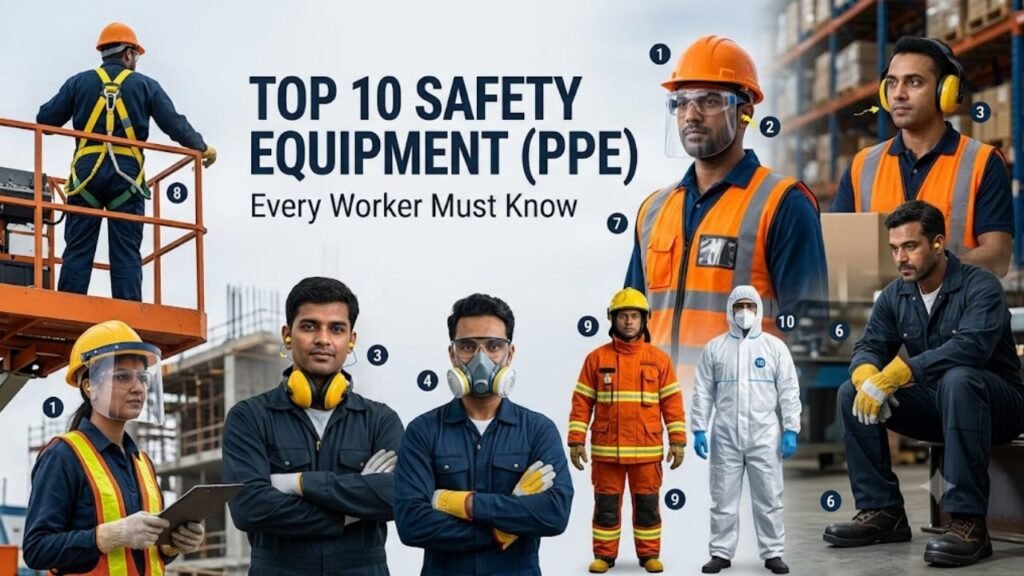
- Safety Helmets (Hard Hats)
Protects your head from falling objects, impacts, and electrical hazards. Common on construction sites, factories, and mining operations across India.
- Safety Goggles and Face Shields
Shields your eyes and face from dust, chemical splashes, sparks, and flying debris. Essential in welding, chemical plants, and manufacturing units.
- Ear Protection (Earplugs and Earmuffs)
Guards your hearing from prolonged exposure to loud machinery and equipment. Widely used in factories, textile mills, and construction sites.
- Respiratory Masks and Respirators
Protects your lungs from dust, fumes, gases, and harmful airborne particles. Crucial in mining, chemical industries, and pharmaceutical manufacturing.
- Safety Gloves
Shields your hands from cuts, chemicals, heat, and electrical shocks. Different materials suit different jobs, from leather gloves to rubber insulated ones.
- Safety Shoes and Boots
Protects your feet from heavy falling objects, punctures, and slippery surfaces. Steel-toe boots are standard on most Indian construction and industrial sites.
- High-Visibility Vests and Clothing
Keeps you visible to vehicles and machinery operators in low-light or busy work areas. Mandatory on highways, construction zones, and warehouses.
- Safety Harnesses
Prevents falls when working at heights, like on scaffolding or rooftops. A must-have in Indian construction and telecom tower maintenance work.
- Fire-Resistant Clothing (FR Suits)
Protects against flames, heat, and sparks in high-risk environments. Common in oil refineries, welding units, and electrical substations.
- Full-Body Protective Suits (Coveralls)
Shields your entire body from chemical exposure, biological hazards, or hazardous dust. Frequently used in labs, chemical plants, and healthcare settings.
Each of these plays a specific role depending on your industry and job risks. Wearing the right combination genuinely reduces workplace accidents across Indian industries.
Frequently Asked Questions (FAQs)
PPE (Personal Protective Equipment) includes safety equipment and clothing worn by workers to protect them from workplace hazards such as falling objects, chemicals, dust, noise, heat, and electrical risks.
Common PPE includes safety helmets, safety shoes, gloves, safety goggles, face shields, hearing protection, respirators, high-visibility clothing, safety harnesses, and protective clothing.
A safety helmet protects the worker’s head from falling objects, impact, and certain workplace hazards. It is especially important in construction, manufacturing, and industrial work areas.
Workers should wear suitable safety gloves when their hands may be exposed to cuts, abrasions, chemicals, heat, sharp objects, or other hazards. The type of glove should match the specific workplace risk.
Safety goggles protect the eyes from dust, chemical splashes, flying particles, sparks, and other hazards that can cause eye injuries.
Safety shoes help protect feet from falling objects, sharp materials, crushing hazards, slips, and other workplace risks. Many industrial safety shoes also include protective toe caps and slip-resistant soles. If you need to know which safety shoes is better you can directly mail (info@prosafetyacademy.com) or WhatsApp where we will inform you.
A safety harness is used as part of a fall-protection system when workers perform tasks at height. It helps reduce the risk of serious injury from falls when correctly selected, fitted, inspected, and connected to an appropriate anchorage system.
Earplugs and earmuffs are commonly used to protect workers from hazardous noise levels. Hearing protection should be selected based on the noise exposure and workplace requirements.
No. PPE is an important last line of defense but should not be the only safety measure. Employers should first control hazards through elimination, substitution, engineering controls, and administrative controls wherever possible.
PPE should be selected according to the hazards identified through a workplace risk assessment. It should provide appropriate protection, fit the worker correctly, be compatible with other PPE, and be properly inspected, maintained, and replaced when necessary.