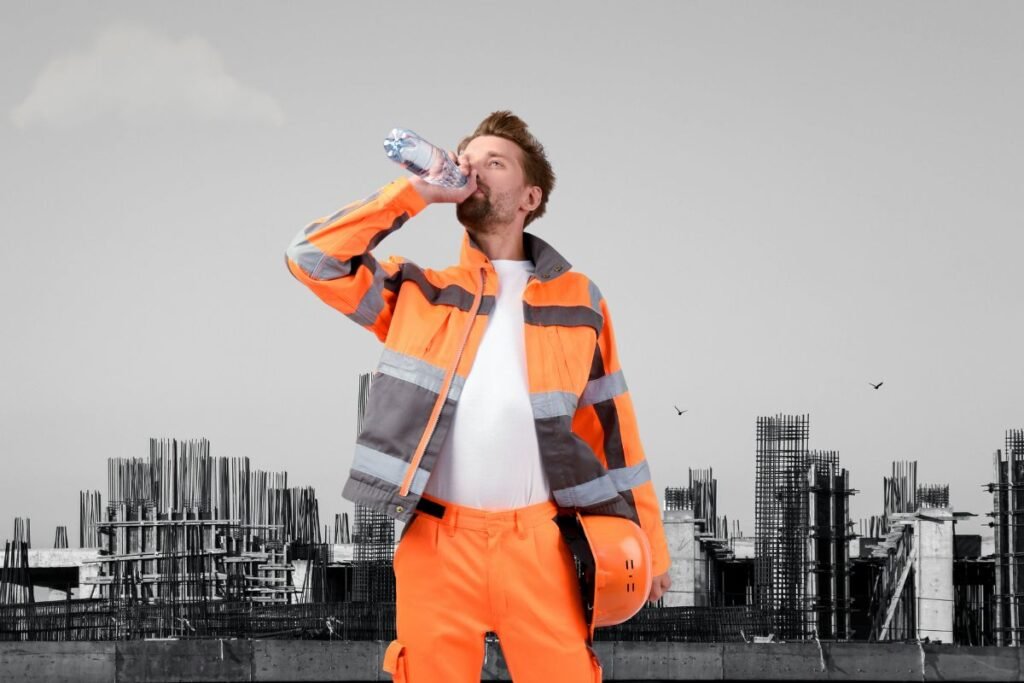
Water, tea, sports drinks, juice, soda: which ones are best at work? The answer depends on the job, the weather, and the person. This article explains the pros and cons of common drinks, then shows how employers and workers can build a simple hydration plan.
Choosing the Right Drink
Good drink choices consider:
- Taste and temperature (people drink more of what they enjoy)
- Calories and sugar
- Electrolyte content
- Availability at the workplace
- Personal health needs
Workers should also have some freedom to choose, since preferences differ.
Plain Water
Plain, non-carbonated water should make up the largest share of what most workers drink.
| Pros | Cons |
| Zero calories | Large amounts without salt or food may dilute blood sodium |
| Easy to supply and carry | Some workers dislike the taste, especially warm or chlorinated tap water |
| Suitable for most people | Mineral waters may not suit everyone, for example, people with kidney stones or high blood pressure may need specific types |
| Spring water is a universal choice | – |
Sports and Electrolyte Drinks
These can help when work is long, intense, and sweaty.
| Pros | Cons |
| Replace some sodium and other minerals | Can be high in sugar and calories |
| Provide carbohydrates for energy | Large volumes may cause stomach discomfort |
| May improve taste and encourage drinking | Not needed for light work |
| Can help maintain work output late in the day | Drinks made for athletes may not suit all-day factory or farm work |
The article suggests that drinks designed for industrial workers, lower in carbohydrates and pleasant to drink all day, may be more suitable than athlete products.
Fruit and Vegetable Juices
| Pros | Cons |
| Taste good | Contain natural and added sugars |
| Offer some vitamins and nutrients | Slow stomach emptying in large amounts |
| – | Add calories |
Limit them rather than make them the main drink.
Carbonated Drinks and Sparkling Water
Pros: Widely available and tasty.
Cons: Added sugar, extra calories, and fizz that may reduce thirst so people drink less.
Pros: Research suggests it hydrates about as well as still water. Some people drink more because they like the fizz. Health agencies suggest it is a better choice than sugary drinks.
Cons: May cause bloating. Not recommended for people with acid reflux, ulcers, or some throat and breathing conditions.
| Pros | Cons |
| Coffee and tea can count toward daily fluid intake. | Very high doses may increase urine output. |
| Moderate caffeine (up to about 400 mg per day for most adults) is considered safe. | Too much caffeine may affect sleep and nerves. |
| Regular drinkers develop tolerance to the diuretic effect. | Not suitable for everyone, such as pregnant women who should limit it. |
| – | Energy drinks may add sugar and extra stimulants. |
Practical view: Moderate coffee and tea are fine, but water should remain the base drink.
Drink Temperature at a Glance
- Hot environments: chilled (about 10–15 °C), not ice cold.
- Cold environments: warm drinks.
- Hot and dry conditions: hot drinks may help cooling if sweat can evaporate, but this does not work in high humidity.
- Moderate conditions: drinks at a comfortable temperature the worker likes.
Building a Simple Workplace Hydration Plan
No single plan fits everyone, but this basic structure works for many workplaces.
Before Work
- Drink fluids with breakfast and on the way to work.
- Start the shift well hydrated.
- Check urine color if possible.
During Work
- Drink small amounts (about 150–250 mL) frequently.
- Do not exceed about 1.5 L per hour.
- Drink at every rest break, plus extra breaks in heat or cold.
- Eat meals and snacks, which help replace salt and fluid.
After Work
- Keep drinking steadily through the evening.
- Have meals containing sodium.
- Replace losses gradually, not all at once.
Calculating Personal Needs
General estimates used in clinical practice include:
- About 30–45 mL of water per kg of body weight per day
- About 1 mL of water per kcal of energy used
These are rough guides only. Sweat rate, climate, health, and job demands change the real need. A simple method is to weigh before and after work and note any weight change.
Employer Responsibilities: A Checklist
- Provide constant, easy access to safe drinking water
- Keep drinks at suitable temperatures
- Offer a variety of drinks, including electrolyte options where needed
- Make sure drinks taste good and smell fresh
- Provide clean toilets with free access
- Encourage meal breaks and rest breaks
- Train workers on hydration
- Support acclimatization for new or returning workers
- Watch for women or other workers who avoid drinking due to facility concerns
Worker Responsibilities: A Checklist
- Come to work well hydrated
- Carry a water bottle
- Drink small amounts regularly
- Choose drinks they enjoy, but limit sugary ones
- Eat regular meals
- Monitor urine color and toilet use
- Speak up about symptoms or lack of facilities
- Avoid overdrinking
Making Hydration a Workplace Culture
Habits can change. The article stresses that drinking patterns are largely habitual, so they can be improved. Culture grows when:
- Supervisors drink water openly and encourage others
- Breaks for drinking are normal, not seen as weakness
- Training is regular and practical
- Water stations are visible and well maintained
- Workers feel safe to take a drink or a break
Common Myths
- “Thirst tells me everything.” It is a late signal, especially in cold or hard work.
- “Coffee always dehydrates.” Moderate intake counts toward fluid needs.
- “More water is always better.” Too much can be harmful.
- “Salt tablets help.” They are not recommended. Food and suitable drinks are better.
- “Hydration is only for hot jobs.” Cold and indoor jobs matter too.
Key Takeaways
- Water should be the main drink for most workers.
- Sports drinks, juices, and caffeine have a place but need limits.
- Temperature should match the environment.
- A simple plan covers before, during, and after work.
- Employers and workers both play a part.
Conclusion
Choosing the right drink and following a basic plan can make a real difference to health, comfort, and safety. Hydration is simple, but it works best when it is planned, supported, and made part of everyday workplace culture.
About Career ProSafety Academy Private Limited
Career ProSafety Academy Private Limited supports learners and organizations in building awareness of workplace health, safety, and environment (HSE) practices. These articles are for general information only and are not a substitute for professional medical or legal advice. Workers with health conditions should consult a doctor, and organizations should follow their local occupational safety regulations.
Related Article:
Why Hydration Is a Workplace Safety Issue, Not Just a Health Tip
Heat Stress Prevention: A Complete Guide to Workplace Hydration
Cold Workplaces and Hydration: The Hidden Risk Nobody Talks About
Dehydration and Overhydration at Work: Signs, Risks, and What to Do