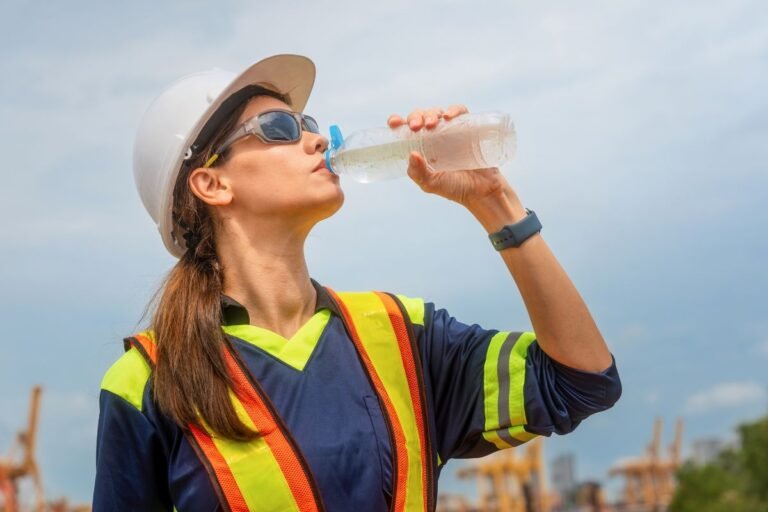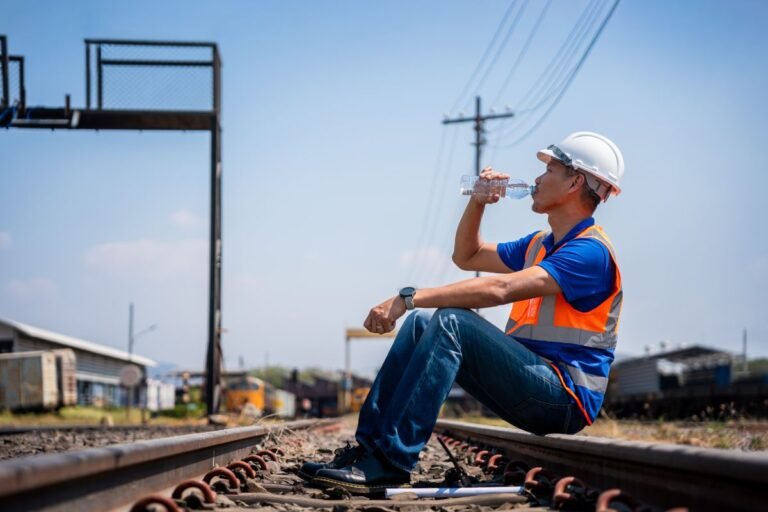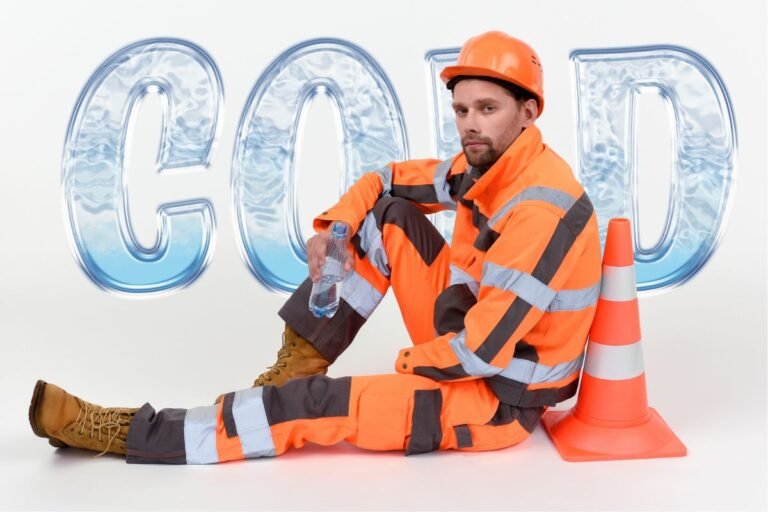
Most people think of water as a daily habit, not a safety control. But in the workplace, the water a worker drinks can affect alertness, decision-making, and even life.
The human body can survive much longer without food than without fluids. Losing around 15% of body water can lead to death. Even a loss of 1–2% can reduce a worker’s ability to work and think clearly. This is why HSE professionals treat hydration as part of workplace safety planning.
What Does “Hydration” Really Mean?
Total body water makes up roughly 45–75% of body mass, depending on age, sex, and body composition. The body is always gaining and losing water. Three terms are worth knowing:
- Euhydration: the body’s water balance is normal.
- Dehydration: the body has lost more water than it has taken in.
- Overhydration: the body holds too much water, usually from drinking too much too quickly.
Good hydration means staying in the healthy middle zone.
Why Workers Lose Water
The body cools itself mainly by sweating. When sweat evaporates from the skin, it carries heat away. This system works well, but it uses up water.
During physical work, sweat output often exceeds what a worker drinks. Over a shift, that gap grows. Sweat loss rises with:
- Harder or longer physical work
- Higher air temperatures
- Heavy or insulated clothing and protective equipment
- Better fitness levels, which can mean more sweating
- Heat acclimatization, which also increases sweating
Water is also lost through breathing, urine, and, in illness, vomiting or diarrhea.
actors That Change How Much Water You Need
No two workers need exactly the same amount of fluid. The article groups the factors into two types.
Factors That Change How Much Water You Need
No two workers need exactly the same amount of fluid. The article groups the factors into two types.
Personal Factors
- Age: Older workers sweat later and less effectively, feel less thirsty, and often have lower total body water.
- Gender: Men generally have higher fluid needs and sweat more in humid conditions.
- Body size and composition: Larger people sweat more. People with less body fat hold more water.
- Diet: High-protein, high-fiber, or low-carbohydrate diets can change water needs.
- Health and medication: Fever, vomiting, diarrhea, diabetes, kidney disease, and some medicines can disturb fluid balance.
- Thirst: Thirst usually appears only after a 1–2% loss of body weight, so it is a late warning.
Workplace Factors
- Air temperature, humidity, air movement, and sunlight
- Clothing and protective gear
- Work intensity and duration
- Access to toilets, water, and rest breaks
- Taste, temperature, and type of drinks available
A Quick Look at the Numbers
The European Food Safety Authority suggests total daily water intake of at least 2 L for women and 2.5 L for men, including water from food and drinks. About 80% should come from liquids.
Workers doing hard physical work in hot conditions can need far more. In extremely hot environments, fluid needs may reach 8–10 L per day, and sweat rates can reach 2–3 L per hour.
Many Workers Start the Day Already Short of Water
Studies from construction, farming, forestry, mining, healthcare, and offices show that dehydration is common in many industries. Some findings:
- In studies of Saudi construction workers, around 85% were dehydrated before work.
- Among foresters in Poland, up to 70% were dehydrated before work in summer.
- Even teachers, office staff, and nurses showed high rates of dehydration.
This shows that dehydration is not only a “hot outdoor job” problem. It can affect almost any workplace.
Pros and Cons of Relying on Thirst
Many workers say, “I’ll just drink when I’m thirsty.” Is that enough?
| Pros | Cons |
| It is simple and needs no equipment or planning. | Thirst appears after some water loss has already happened. |
| It can help prevent overdrinking, which can cause a dangerous drop in blood sodium. | Cold weather and hard physical effort can suppress thirst. |
| Most people stay hydrated overall when they have easy access to food and drinks. | Older workers feel thirst less strongly. |
| – | In very hot work, sweat loss can outrun what thirst alone will replace. |
Bottom line: For light work in mild conditions, drinking to thirst may be fine. For hard, hot, or cold work, a simple drinking plan is safer.
How Hydration Affects Safety and Productivity
Even mild dehydration can bring:
- Tiredness and reduced alertness
- Poor concentration and slower reaction time
- Headaches and dizziness
- Lower physical performance
- Higher perceived effort, so the same task feels harder
One study mentioned in the article found that thirst, hunger, and tiredness were main causes of prescribing errors among junior doctors. If hydration can affect a doctor’s accuracy, it can affect a crane operator, driver, welder, or machine operator too.
The Employer’s Role
Providing drinking water is a legal duty for employers in many countries, including under U.S. sanitation rules and Polish occupational safety law. But supplying water is only the first step.
Good employers also:
- Keep water close to the workstation
- Allow time for drinking breaks
- Provide clean toilets
- Educate workers about hydration
- Watch for early signs of dehydration
Simple Daily Habits for Workers
- Start the day well hydrated.
- Drink small amounts regularly rather than a large amount at once.
- Check urine color. Pale or light yellow is a good sign.
- Eat regular meals, which supply water and electrolytes.
- Keep a water bottle within reach.
- Rehydrate after work, too.
Key Takeaways
- Hydration is a safety control, not a luxury.
- Water needs vary from person to person and job to job.
- Thirst is a late signal, but drinking too much is also risky.
- Employers and workers share the responsibility.
Conclusion
A well-hydrated worker is a safer, sharper, and more productive worker. Building a culture where drinking water is normal, easy, and encouraged is one of the simplest and most effective safety steps any organization can take.
About Career ProSafety Academy Private Limited
Career ProSafety Academy Private Limited supports learners and organizations in building awareness of workplace health, safety, and environment (HSE) practices. These articles are for general information only and are not a substitute for professional medical or legal advice. Workers with health conditions should consult a doctor, and organizations should follow their local occupational safety regulations.
Related Article:
Heat Stress Prevention: A Complete Guide to Workplace Hydration
Cold Workplaces and Hydration: The Hidden Risk Nobody Talks About
Dehydration and Overhydration at Work: Signs, Risks, and What to Do
What Should Workers Drink? A Complete Guide to Workplace Hydration