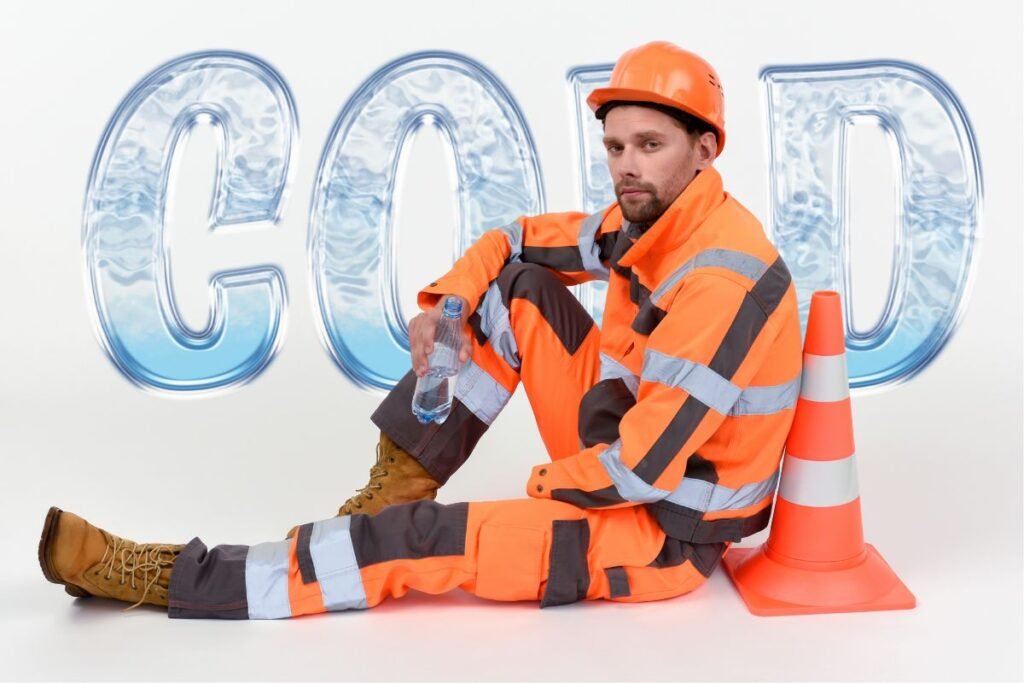
When people think of dehydration, they picture heat, sun, and sweat. But dehydration is also common in cold workplaces, including cold storage, outdoor winter work, forestry, construction, and mining. In cold conditions, workers often feel less thirsty, drink less, and may not realize they are drying out.
Can You Really Get Dehydrated in the Cold?
Yes. The article notes that dehydration in cold environments can reach 3–8% of body weight, levels similar to those reported in hot climates. One study of foresters even found a higher percentage of dehydrated workers in winter than in summer.
Why Cold Work Causes Dehydration
Several reasons work together.
Cold-Induced Urination (Diuresis)
When the body is cold, blood vessels narrow, and the kidneys remove more fluid. This makes people urinate more.
Breathing Cold, Dry Air
Cold air holds little moisture. The body humidifies every breath, so water is lost through the lungs and airways.
Heavy Clothing and Sweat
Thick, insulated clothing can cause sweating during effort. Soldiers in very heavy cold-weather gear lost nearly 2 L of sweat per hour during moderate or heavy exercise. Reducing insulation reduced sweat greatly.
Reduced Thirst
Cold exposure dulls the sense of thirst, so people drink less than they need.
Limited Access to Fluids
Water may freeze, and drinks may be out of reach under layers of clothing.
Avoiding Toilet Trips
Some workers drink less on purpose to avoid undressing and walking to a toilet in the cold.
Why It Matters
Dehydration in the cold can:
- Reduce physical and mental performance
- Increase fatigue
- Worsen the body’s ability to handle cold
- Raise the risk of other injuries
It can be especially risky because workers may not feel “hot” or “thirsty,” so they do not notice the problem.
What to Drink in the Cold
NIOSH and OSHA recommend warm beverages in cold environments, drunk in small amounts every 15–20 minutes.
| Pros of Warm Drinks in the Cold | Cons of Warm Drinks in the Cold |
| They are more pleasant and encourage drinking. | Flasks and heating equipment may be needed. |
| They can help raise core body temperature when the body is cold. | Very hot drinks can burn the mouth. |
| They are comforting and may improve morale. | Sugary hot drinks can add a lot of calories. |
Coffee and Tea in Cold Work
Many workers rely on hot coffee or tea. The article explains that:
- Moderate caffeine (up to about 400 mg per day for most adults) is considered safe by European authorities.
- Large doses (about 500 mg or more) may increase urine output.
- People who drink caffeine regularly develop tolerance to the diuretic effect.
- Coffee and tea can contribute to daily fluid intake.
So a hot cup of coffee or tea is not “bad,” but it should not be the only drink. Water, soups, and other warm non-caffeinated options should also be available.
Dress Smart: Layers Matter
Clothing is part of hydration planning. Overdressing causes sweat, and wet clothing makes workers colder later.
- Dress in layers that can be removed or opened.
- Avoid overheating during heavy tasks.
- Keep clothing dry.
- Use breathable inner layers.
Less sweat means less fluid loss and less chilling.
Pros and Cons of Drinking Strategies in the Cold
Planned Drinking (Set Times)
Pros: Ensures regular intake even without thirst.
Cons: Needs organization and reminders.
Drinking to Thirst
Pros: Simple, and helps avoid overdrinking.
Cons: Thirst is weaker in the cold, so workers may under-drink.
Free (Ad Libitum) Drinking
Pros: Flexible and easy.
Cons: Often leads to too little fluid when conditions are demanding.
Recommended approach: A light plan, such as a small drink at every break, works best in the cold.
Practical Tips for Employers
- Provide warm drinks and insulated flasks or containers.
- Make sure water does not freeze, using insulated or heated stations.
- Allow warm-up and drinking breaks in sheltered areas.
- Provide clean, warm, accessible toilets.
- Train workers to recognize dehydration in cold weather.
- Do not discourage drinking because of toilet concerns.
Practical Tips for Workers
- Drink at every break, even if not thirsty.
- Carry a thermos with a warm drink.
- Eat regular meals and warm soups.
- Avoid overdressing during heavy work.
- Watch urine color. Pale yellow is a good sign.
- Do not skip drinks just to avoid toilet trips.
Special Considerations
- Women workers: may avoid drinking if toilets are far, dirty, or unsafe. Employers should address this.
- Older workers: have weaker thirst signals and need extra attention.
- Workers with health conditions or medicines: should follow medical advice.
A Note on Alcohol
Alcohol is sometimes used “to warm up.” It does not help hydration or safe cold work, and it should not be used as a warming drink.
Key Takeaways
- Dehydration is a real risk in cold workplaces.
- Cold reduces thirst while increasing fluid loss.
- Warm drinks, layered clothing, and regular drinking breaks help.
- Good toilet access supports good hydration.
Conclusion
Cold weather can hide the signs of dehydration. By building simple routines, offering warm drinks, and making facilities accessible, organizations can protect workers in winter just as carefully as in summer.
About Career ProSafety Academy Private Limited
Career ProSafety Academy Private Limited supports learners and organizations in building awareness of workplace health, safety, and environment (HSE) practices. These articles are for general information only and are not a substitute for professional medical or legal advice. Workers with health conditions should consult a doctor, and organizations should follow their local occupational safety regulations.
Related Article:
Why Hydration Is a Workplace Safety Issue, Not Just a Health Tip
Heat Stress Prevention: A Complete Guide to Workplace Hydration
Dehydration and Overhydration at Work: Signs, Risks, and What to Do
What Should Workers Drink? A Complete Guide to Workplace Hydration