Behind every factory gate, a family is waiting at home. A mother cooking dinner, a child asking when Papa will be back.
Most days, the worker walks through that door safe and tired. Some days, he doesn’t, and most of those days were preventable.
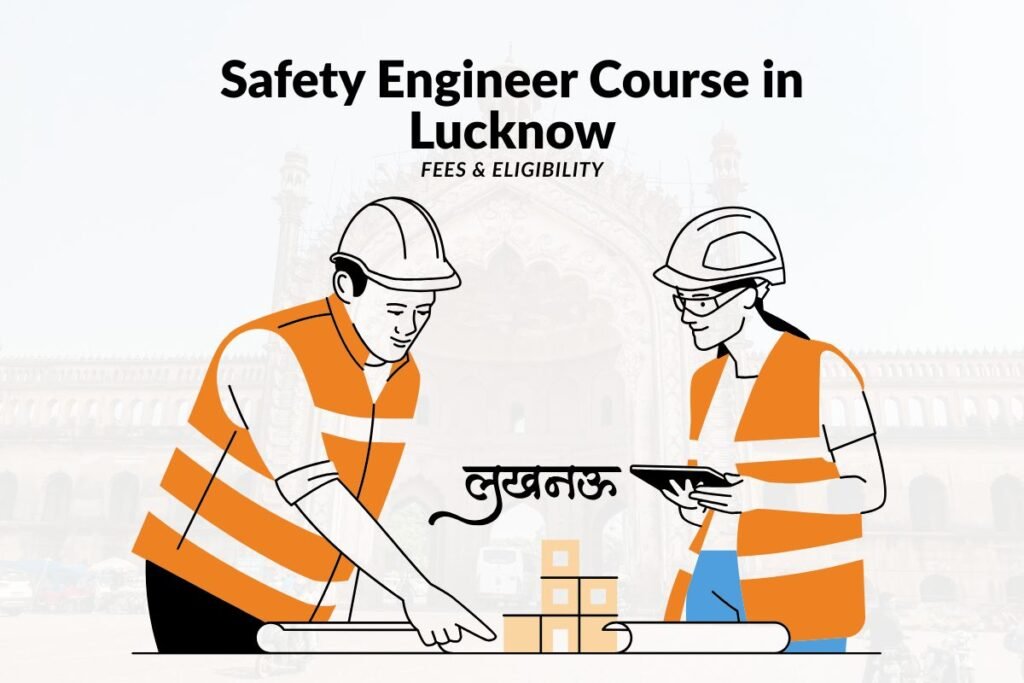
Safety engineers are the quiet people who make sure everyone goes home. If that’s work you’d be proud of, let’s explore how a safety engineer course in Lucknow can start your journey.
Since this version doesn’t mention Rahul, you can ignore my earlier note about him. Want me to swap this into the article file?
If you live in Lucknow or nearby cities, you don’t have to move far to start this career. Let’s walk through what a safety engineer does, which courses you can take, and where the career can lead.
Safety officer course duration and fees
| Sr. No. | Course Name | Eligibility Criteria | Fees (₹) | Duration |
|---|---|---|---|---|
| 1 | ADIS (Advanced Diploma in Industrial Safety) | Graduation in PCB & PCM | 65,000 | 1 Year |
| 2 | DFESM (Diploma in Fire Engineering & Safety Management) | 12th & Graduation in any specialization | 65,000 | 1 Year |
| 3 | DIS (Diploma in Industrial Safety) | 12th & Graduation in any specialization | 65,000 | 1 Year |
| 4 | Diploma in Fire & Safety Methods | 12th & Graduation in any specialization | 65,000 | 1 Year |
| 5 | Diploma in Food Safety | 12th & Graduation in any specialization | 65,000 | 1 Year |
| 6 | Diploma in Fire Technician | 12th & Graduation in any specialization | 65,000 | 6 Months |
| 7 | Diploma in Electrical Safety | 12th & Graduation in any specialization | 65,000 | 1 Year |
| 8 | Diploma in Construction Safety | 12th & Graduation in any specialization | 65,000 | 1 Year |
| 9 | Diploma in Environmental Safety | 12th & Graduation in any specialization | 65,000 | 1 Year |
| 10 | Diploma in Fire & Safety Engineering Techniques | 12th & Graduation in any specialization | 65,000 | 1 Year |
| 11 | Certificate in Fire & Safety Engineering Techniques | 12th & Graduation in any specialization | 65,000 | 1 Year |
| 12 | Post Diploma in Fire & Safety Engineering Techniques | Graduation in PCB & PCM | 65,000 | 6 Months |
| 13 | Advanced Diploma in Occupational Safety, Health & Environment | Graduation in PCB & PCM | 70,000 | 1 Year |
| 14 | Post Diploma in Environment Safety Engineering | Graduation in PCB & PCM | 70,000 | 1 Year |
| 15 | Diploma in Industrial & Environmental Safety | 12th & Graduation in any specialization | 65,000 | 1 Year |
| 16 | Diploma in Health, Environment and Safety Engineering | 12th & Graduation in any specialization | 65,000 | 1 Year |
| 17 | Diploma in Fire Engineering & Safety Techniques | 12th & Graduation in any specialization | 65,000 | 1 Year |
| 18 | Diploma in Health, Safety & Environment Management | 12th & Graduation in any specialization | 65,000 | 1 Year |
| 19 | Fire Man Technician | 12th | 65,000 | 1 Year |
| 20 | Diploma in Industrial Safety | Graduation in any specialization | 65,000 | 1 Year |
What Is a Safety Engineer Course?
A Safety Engineer Course is a professional training program designed to teach students and working professionals how to identify workplace hazards, assess risks, prevent accidents, and maintain health and safety standards in industrial and construction environments.
The course generally covers areas such as:
- Industrial Safety Management
- Hazard Identification and Risk Assessment (HIRA)
- Job Safety Analysis (JSA)
- Fire Safety and Emergency Response
- Construction Safety
- Electrical Safety
- PPE (Personal Protective Equipment)
- Work Permit / Permit to Work (PTW)
- Incident and Accident Investigation
- Occupational Health and Safety
- Environmental Safety
- Safety Audits and Inspections
- Emergency Preparedness
- What does a Safety Engineer do?
After completing an appropriate safety qualification, a Safety Engineer may work with companies to:
- Identify unsafe conditions and practices.
- Conduct workplace safety inspections.
- Prepare risk assessments and safety procedures.
- Conduct toolbox talks and safety training.
- Investigate workplace accidents and incidents.
- Monitor PPE compliance.
- Support emergency and fire-safety preparedness.
- Help organizations meet applicable safety and regulatory requirements.
- Career Opportunities
Depending on the qualification and experience, graduates can pursue roles such as:
Safety Engineer | Safety Officer | HSE Engineer | HSE Officer | EHS Executive | Industrial Safety Professional | Construction Safety Officer
For a Lucknow-focused article, you can position the topic around course eligibility, duration, fees, syllabus, career opportunities, and Safety Engineer salary in India/Gulf countries.
Important: “Safety Engineer Course” is a broad term, not necessarily the name of one standardized qualification. The exact eligibility, duration, recognition, and job prospects depend on the particular institute and qualification being offered.
What Does a Safety Engineer Actually Do?
A safety engineer finds risks at work and fixes them before someone gets hurt. You’ll spend your days on the shop floor, not just behind a desk.
Typical duties include:
- Inspecting plants, machines, and work areas for hazards
- Carrying out risk assessments like HIRA and job safety analysis
- Managing permit to work systems for high-risk jobs
- Investigating incidents and near misses
- Running safety training, toolbox talks, and fire drills
- Making sure the site follows safety laws and company rules
- Maintaining safety records, audits, and reports
It’s a role that mixes technical knowledge with people skills. You’ll need to explain safety rules in a way workers actually follow.
Why Choose a Safety Career Today?
Industries keep growing, and so do their safety needs. Manufacturing, construction, oil and gas, power, pharma, and logistics all hire safety professionals.
Safety rules are also getting stricter. Companies need trained people to meet legal requirements and avoid costly accidents.
Here’s why many students pick this path:
- You can start working soon after a short course
- Jobs exist in almost every industry
- Skills are useful in India and abroad
- The work protects real lives, which feels good
- Career growth is steady with experience and certifications
Safety Engineer Course Options in Lucknow
Lucknow offers several routes into safety, from short certificates to degrees. The right one depends on your education and goals.
Diploma in Industrial Safety Engineering
This is the most common starting point. Many diplomas run from six months to one year, and some programs go up to two years.
It suits students who have finished 10th, 12th, or an engineering diploma. You’ll learn hazard identification, fire safety basics, industrial laws, and safety management.
Advanced Diploma in Industrial Safety
This is a deeper, more technical program, usually lasting one year. It works well if you already hold a diploma or degree and want to move into a safety role.
Always check whether the program carries the approval or recognition it claims. Ask for proof before you pay.
Diploma in Fire and Safety Engineering
If fire protection interests you, this course covers firefighting systems, fire prevention, and emergency response. It’s popular because fire safety jobs exist in almost every large building and plant.
B.Sc. in Fire and Safety
This is a three-year degree for students who want a longer academic path. It opens doors to higher studies and senior roles later.
International Certifications: NEBOSH and IOSH
These certificates carry weight with employers in India and overseas.
- IOSH Managing Safely: A short, beginner-friendly course for supervisors and new safety staff
- NEBOSH IGC: A widely recognized certificate covering core health and safety topics
- NEBOSH International Diploma: An advanced qualification for experienced professionals aiming at senior positions
Many people take a diploma first and add NEBOSH or IOSH later to boost their profile.
Eligibility: Who Can Join?
Requirements differ by course, but here’s a general guide.
| Course Type | Typical Eligibility |
|---|---|
| Certificate / short diploma | 10th or 12th pass |
| Diploma in industrial safety | 12th pass or ITI / diploma holder |
| Advanced / post diploma | Diploma or degree in engineering or science |
| B.Sc. Fire and Safety | 12th pass |
| NEBOSH IGC / IOSH | Open to most learners; English proficiency helps |
Eligibility rules vary by institute and awarding body, so confirm details before you apply.
What You’ll Learn in a Safety Engineering Course
A good program mixes classroom theory with practical training. Common subjects include:
- Hazard identification and risk assessment (HIRA)
- Fire prevention and firefighting systems
- Industrial safety laws and standards
- Personal protective equipment (PPE)
- PTW – Permit to work systems
- Electrical, chemical, and mechanical safety
- Working at height and confined space safety
- Accident investigation and reporting
- Occupational health and environmental safety
- Emergency planning and first aid
Practical sessions matter just as much. Handling real extinguishers and inspecting real equipment teaches things a textbook can’t.
Career Opportunities After the Course
Once you finish, you can apply for roles such as:
- Safety Officer
- Safety Supervisor
- Safety Engineer
- Fire and Safety Officer
- HSE Officer or HSE Engineer
- Safety Auditor
- Site Safety Coordinator
Industries hiring these roles include construction, manufacturing, oil and gas, power plants, pharmaceuticals, warehousing, and real estate. Many students also find work with contractors and consulting firms.
Salary and Growth: What to Expect
Pay depends on your qualification, industry, location, and experience. Freshers usually start at an entry-level salary, and it grows as you gain site experience and certifications.
Oil, gas, and large construction projects often pay more than small units. Overseas roles, especially in the Gulf, can pay higher still, though they usually ask for international certification and experience.
Treat any salary figure you read online as a rough guide, not a promise.
Skills That Help You Succeed
Course certificates get you interviews. These skills help you keep the job and grow.
- Sharp observation and attention to detail
- Clear communication with workers and managers
- Calm decision-making in emergencies
- Basic technical understanding of machines and processes
- Report writing and documentation
- Willingness to keep learning as rules change
How to Choose the Right Institute in Lucknow
Not all training centers are equal. Check these points before you enroll.
- Approvals and recognition: Ask for official proof, not just claims on a brochure
- Faculty experience: Trainers with real site experience teach better
- Practical training: Look for hands-on fire and safety demonstrations
- Course content: Compare the syllabus with what employers expect
- Placement support: Ask for real examples, not general promises
- Mode of study: Confirm whether classes are offline, online, or hybrid
- Student feedback: Talk to past students if you can
- Total cost: Ask for the full fee, including exams and certification charges
Step-by-Step Path to Becoming a Safety Engineer
- Finish your 10th, 12th, or engineering diploma
- Choose a course that matches your education and budget
- Complete the training with practical sessions
- Add NEBOSH or IOSH for a stronger profile
- Apply for entry-level safety roles and gain site experience
- Move up with advanced certifications and specialization
Final Thoughts
A safety engineering course is a practical way to build a stable career while protecting people. You can start small with a diploma, then grow with experience and international certifications.
Pick a course that fits your education, check the institute carefully, and commit to learning on the job. In a field where mistakes can cost lives, good training truly matters.
Frequently Asked Questions
Yes, you can start with a diploma or certificate course after 12th. Some senior engineer roles may prefer an engineering degree, but many safety officer jobs are open to diploma holders.
Short diplomas can take around six months, while advanced diplomas usually take one year. A B.Sc. takes three years.
Yes, demand exists across construction, manufacturing, oil and gas, and power sectors. Strict safety laws keep these roles in demand.
They aren’t always mandatory, but they help a lot, especially for private companies and overseas jobs.
Many institutes offer online or hybrid options. Make sure practical training is still included.
Lucknow and nearby industrial areas have openings in construction, manufacturing, and service sectors. Many students also move to larger industrial cities or abroad for better roles.
A safety officer focuses on daily site monitoring and compliance. A safety engineer usually works more on technical risk analysis and system design.