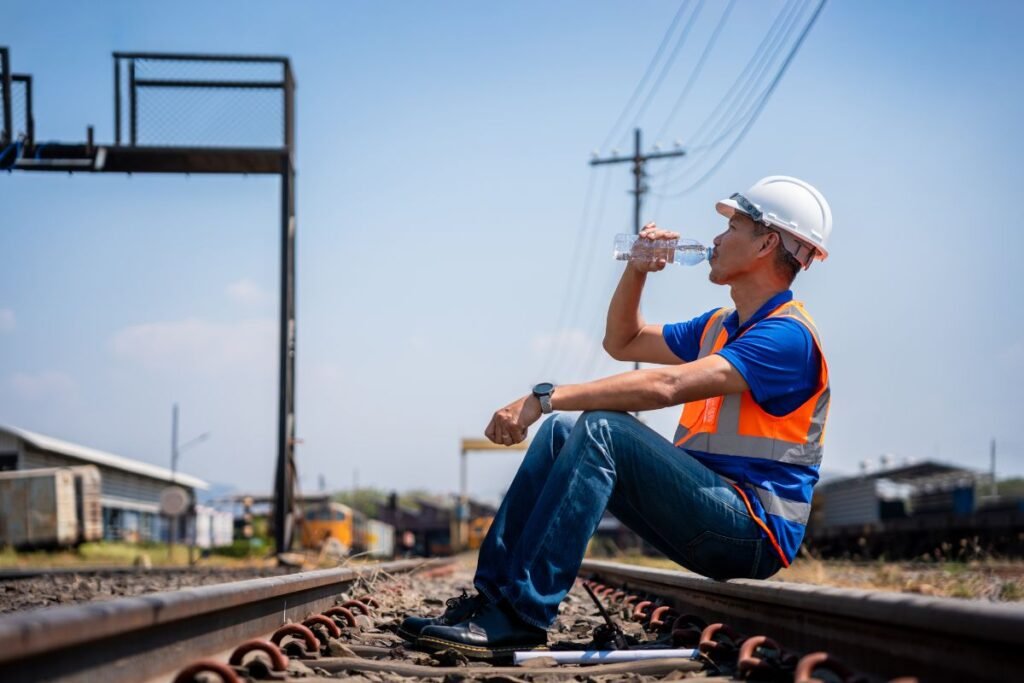
Hot work environments include construction sites, farms, foundries, kitchens, mines, warehouses, and even some hospitals. In all of them, workers sweat heavily, and sweat means water loss. When that water is not replaced, heat illness becomes a real risk.
This article explains how heat affects the body, how much fluid workers may need, and what employers and workers can do about it.
How the Body Handles Heat
The body aims to keep its core temperature near 37 °C (give or take about 1 °C). When the surroundings or the work make the body hot, it sweats. Sweating starts above roughly 28 °C air temperature, and sweat rates can reach 2–3 L per hour in extreme conditions.
If sweat is not replaced:
- Blood volume drops
- The heart works harder
- Body temperature rises faster
- The risk of heat illness grows
Even 1% dehydration can impair the body’s ability to regulate temperature.
Why Hot Workplaces Are So Demanding
Several things combine to raise fluid needs:
- High air temperature: more sweating.
- Humidity: sweat does not evaporate easily, so the body sweats more but cools less. Water is “wasted.”
- Sun and radiant heat: extra heat load on the body.
- Heavy work: more heat produced by muscles.
- Protective clothing: traps heat and moisture.
- Long shifts: losses add up over many hours.
In some hot, hard jobs, daily water needs can rise to 8–10 L, and some studies of soldiers, miners, and construction workers report even more.
What the Research Shows
The article describes a study of workers in Qatar comparing three heat-protection strategies: proper hydration, light clothing, and work–rest cycles. Proper hydration gave the best results. Only 2% of workers had an internal body temperature above the norm, and workers also felt safest with this strategy.
Another study found that drinking about 750 mL of water per hour reduced the risk of dehydration substantially among agricultural and construction workers in hot countries, and also lowered core body temperature.
Recommended Drinking Pattern for Hot Work
Organizations such as NIOSH and OSHA recommend:
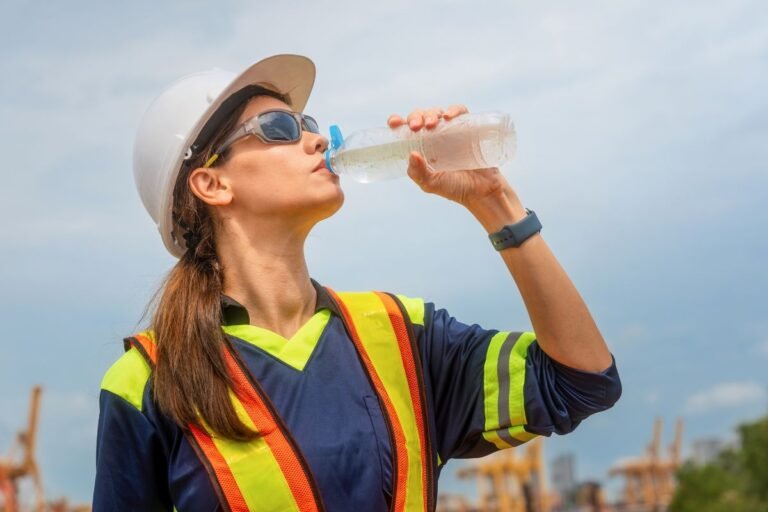
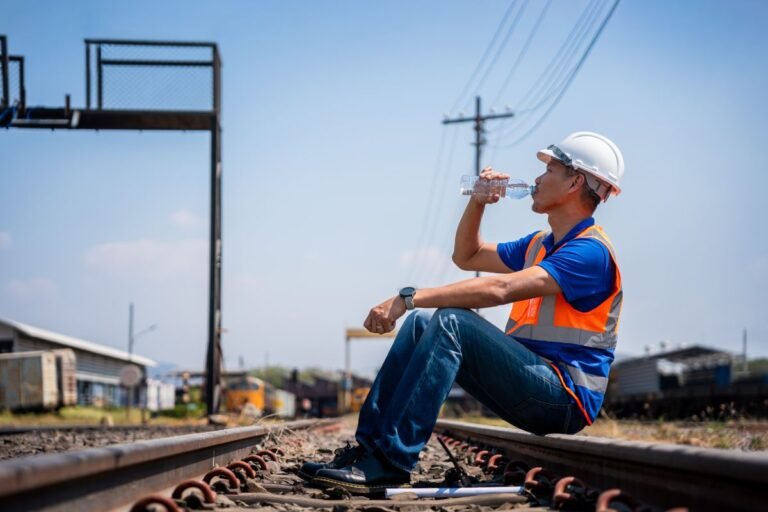
- Drink small amounts often, around 150–250 mL at a time.
- Drink about every 15–20 minutes, before you feel thirsty.
- Do not exceed about 1.5 L per hour.
- Choose chilled water (about 10–15 °C, not ice cold) in hot conditions.
If protective equipment makes frequent drinking impractical, workers should drink well before work and during breaks. One suggestion is about 500 mL per hour before work and again during rest periods.
Pros and Cons of Chilled Drinks
Some people believe cold drinks cause stomach cramps. Research is mixed.
| Pros | Cons |
| Chilled drinks can help lower internal body temperature. | Very cold drinks may be uncomfortable for some people. |
| They taste better in hot weather, which encourages people to drink more. | Large amounts of ice-cold liquid at once may cause nausea or cramps. |
| Drink temperature has little effect on how fast the stomach empties. | – |
Practical tip: Cool, not icy, is the best choice.
Heat Acclimatization: Letting the Body Adapt
Workers new to heat, or returning after a break, need time to adapt. Gradual exposure over about 9–14 days can reduce heat stress risk. As the body adapts:
- Sweating starts earlier and increases
- Sweat contains less salt
- Workers learn to drink more accurately to match losses
Employers should plan gradual work increases for new or returning workers.
Salt and Electrolytes in Heat
Sweat contains mainly sodium and chloride, plus smaller amounts of potassium, calcium, and magnesium. Heavy sweating can remove several grams of sodium per shift.
For most workers, normal meals replace this. But for heavy sweaters:
- Salt food normally and eat regular meals.
- Consider salty snacks or electrolyte drinks when sweating is intense or work lasts long.
- Avoid salt tablets, which are not recommended.
Drinking only large amounts of plain water while sweating heavily and eating little can contribute to low blood sodium (hyponatremia), which can be dangerous.
Pros and Cons of Different Hot-Weather Drinks
Plain Water
Pros: Cheap, available, hydrating.
Cons: Large amounts without food or salt may dilute blood sodium.
Sports and Electrolyte Drinks
Pros: Replace salts, add energy, may taste better.
Cons: Can be high in sugar and calories. Too much can upset the stomach.
Fruit Juices
Pros: Taste good and offer some nutrients.
Cons: High in sugar, and they slow stomach emptying in large amounts.
Rules and Regulations
In Poland, employers must provide beverages for workers in hot microclimates (WBGT above 25 °C), at air temperatures above 28 °C, and in physically demanding work. In the United States, a heat injury and illness prevention standard has been under development, including expectations for water access, rest breaks, training, and acclimatization.
Regardless of local law, good practice includes:
- Easy access to cool drinking water
- Shaded rest areas
- Training on heat illness and hydration
- Supervisors who check on workers
Practical Checklist for Hot Workplaces
For Employers
- Place water stations close to work areas
- Keep water at about 10–15 °C
- Schedule regular drinking and rest breaks
- Adjust work hours, such as earlier shifts, when possible
- Offer electrolyte drinks for long or intense work
- Train supervisors and workers
For Workers
- Drink before work, during work, and after work
- Sip small amounts often
- Wear light, breathable clothing where possible
- Watch urine color and toilet frequency
- Report dizziness, confusion, or heavy fatigue early
Warning Signs to Watch For
- Headache, dizziness, or light-headedness
- Unusual tiredness or irritability
- Dark urine and very little urination
- Muscle cramps or weakness
- Confusion (a medical emergency if severe)
Key Takeaways
- Hot work increases sweat loss and fluid needs.
- Drink small amounts frequently, before thirst appears.
- Cool drinks, rest breaks, and acclimatization all help.
- Replace salt through food, not tablets.
- Do not overdrink, because too much plain water can also harm.
Conclusion
Preventing heat illness takes a team effort. Employers must make water and breaks easy. Workers must use them. Together, these simple steps keep people healthy and working safely even in the toughest heat.
About Career ProSafety Academy Private Limited
Career ProSafety Academy Private Limited supports learners and organizations in building awareness of workplace health, safety, and environment (HSE) practices. These articles are for general information only and are not a substitute for professional medical or legal advice. Workers with health conditions should consult a doctor, and organizations should follow their local occupational safety regulations.
Related Article:
Why Hydration Is a Workplace Safety Issue, Not Just a Health Tip
Cold Workplaces and Hydration: The Hidden Risk Nobody Talks About
Dehydration and Overhydration at Work: Signs, Risks, and What to Do
What Should Workers Drink? A Complete Guide to Workplace Hydration