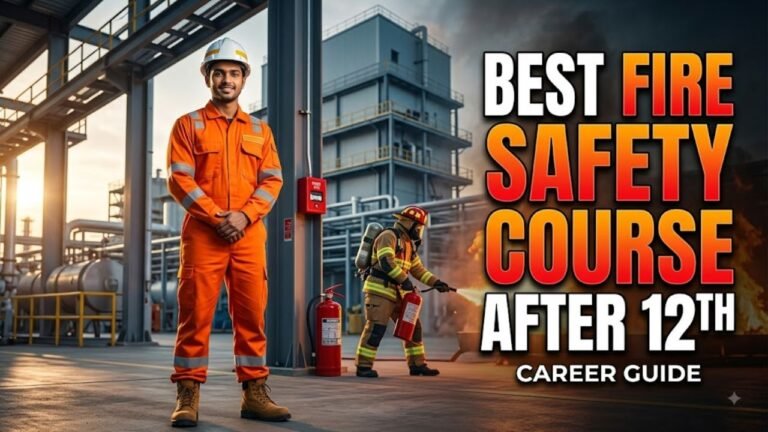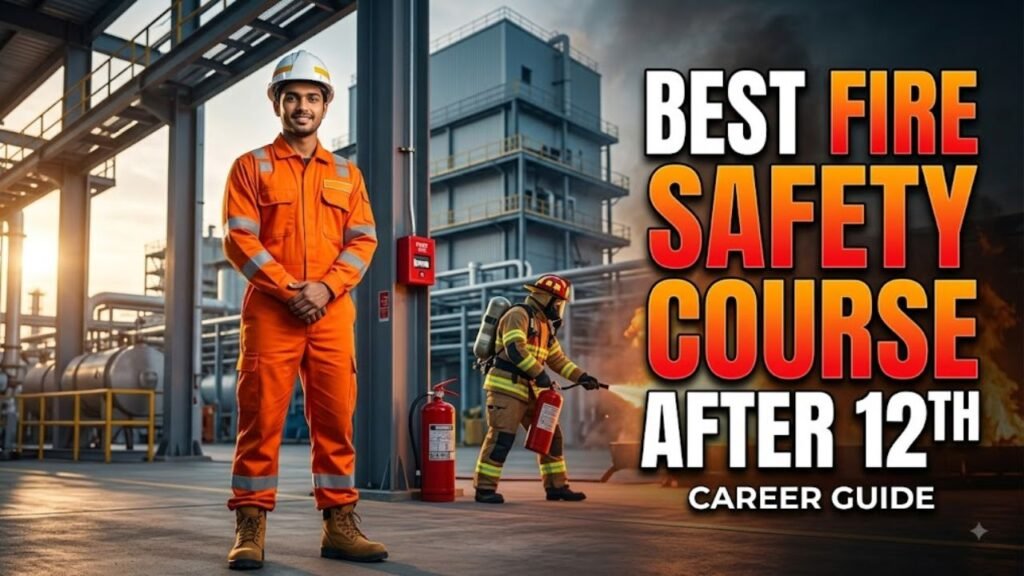
Choosing a career after Class 12 can feel exciting, confusing, and slightly overwhelming. You have many options, but not every course leads toward practical job opportunities. If you enjoy helping people, solving problems, and working in active environments, fire safety can be interesting. A fire safety career allows you to develop practical skills while learning how workplaces prevent emergencies. You also learn how trained teams respond when something goes wrong.
The best fire safety course after 12th depends on your education, interests, career goals, and preferred learning style. You should look beyond course names and understand what you will actually learn. A useful course should combine classroom knowledge with practical demonstrations and workplace safety concepts. It should also help you understand fire prevention, emergency response, evacuation, and basic risk management.
Why Fire Safety Is a Growing Career Choice
Fire safety has become an important part of modern workplaces and public facilities. Factories, construction sites, warehouses, hotels, hospitals, offices, and commercial buildings need proper fire precautions. These workplaces require trained people who understand hazards and can support emergency preparedness.
When you choose fire safety, you are not simply learning how to use an extinguisher. You are learning how fires start, spread, and can be controlled. You also learn how people should respond during emergencies without creating additional risks.
Your role can become especially valuable when you understand both fire safety and general workplace safety. Employers often prefer people who can identify hazards and communicate safety instructions clearly. This makes safety training useful across different industries and workplace environments.
Another advantage is the practical nature of this field. You may participate in fire drills, emergency exercises, equipment demonstrations, and evacuation planning. These activities can make learning more interesting than studying theory alone.
You should also remember that safety is a responsibility, not just a job title. Your decisions may influence how effectively workers respond during an emergency. That responsibility can make the profession challenging, but it can also make your work meaningful.
Eligibility After Class 12
If you have completed Class 12, you can explore several fire and safety education pathways. The exact eligibility depends on the course, institute, and qualification you choose. Some programs may accept students from different academic backgrounds.
You should check the admission requirements before selecting any particular course. Some advanced programs may require a diploma or degree instead of Class 12. Short-term certificates may have simpler entry requirements.
Your Class 12 stream can also influence which courses are available to you. Science students may find certain technical programs easier because of their academic background. However, many safety programs focus strongly on practical workplace knowledge.
Before admission, check the course duration, syllabus, practical training, assessment method, and certificate details. You should also understand whether the program matches your intended career path.
Do not choose a course only because its name sounds impressive. Instead, compare what you will learn and how the training can support your career goals.
Course Types and Learning Options
After Class 12, you can find different types of fire safety courses. These may include certificate programs, diploma courses, and longer professional safety programs. Each option can suit a different learner and career objective.
A certificate course can be useful if you want basic knowledge within a shorter period. You can learn subjects such as fire prevention, emergency procedures, extinguishers, and workplace precautions.
Diploma-level programs usually provide broader and deeper training. You may study fire technology, industrial safety, emergency management, hazard identification, and workplace safety practices. These programs can require more time but may provide wider learning exposure.
You can also consider programs combining fire safety with occupational health and industrial safety. These courses can help you understand workplace hazards beyond fire emergencies.
When comparing learning options, look at practical training carefully. A strong learning experience should give you opportunities to understand equipment and emergency procedures. You should also learn through examples based on real workplace situations.
Online learning can provide flexibility, especially when you cannot attend regular classroom sessions. However, practical fire safety skills are easier to understand through demonstrations and supervised activities. A blended approach can therefore be useful when available.
Career Roles and Future Opportunities
After completing suitable training, you can explore several entry-level safety-related roles. Your actual opportunities depend on your qualification, experience, skills, and employer requirements.
You may begin with roles such as fire safety assistant, fireman, safety trainee, or safety supervisor. Some organizations may also have positions supporting emergency preparedness and fire prevention activities.
With experience, you can develop toward broader safety responsibilities. You may eventually work as a safety officer, fire safety officer, or EHS professional. Additional qualifications can help you build knowledge for more specialized responsibilities.
The industry you choose can also shape your career experience. Construction sites can expose you to different hazards than factories or commercial buildings. Hotels, hospitals, warehouses, and large facilities also have their own safety challenges.
Your communication skills can become just as important as your technical knowledge. You may need to conduct toolbox talks, explain emergency procedures, and support safety drills. You may also communicate with workers, supervisors, contractors, and management.
Keep learning as your career develops. You can add specialized training in areas such as industrial safety, occupational health, emergency management, or risk assessment. This approach can help you build a stronger professional profile over time.
How You Can Choose the Right Course
Finding the best fire safety course after 12th starts with understanding your own career target. Ask yourself whether you want a quick introduction or a longer professional learning pathway.
Compare the syllabus, practical facilities, faculty experience, course duration, assessment process, and career support. You should also verify the recognition or approval claims made by the training provider.
Look for a course that teaches practical skills instead of focusing only on certificates. A useful program should help you understand hazards, prevention methods, emergency response, and workplace responsibilities.
Finally, think about where you want to work after completing your training. Your preferred industry can help you select subjects and additional qualifications that support your career direction.
A good fire safety course should give you knowledge, confidence, and practical awareness. If you choose carefully, your Class 12 qualification can become the starting point for a meaningful safety career.