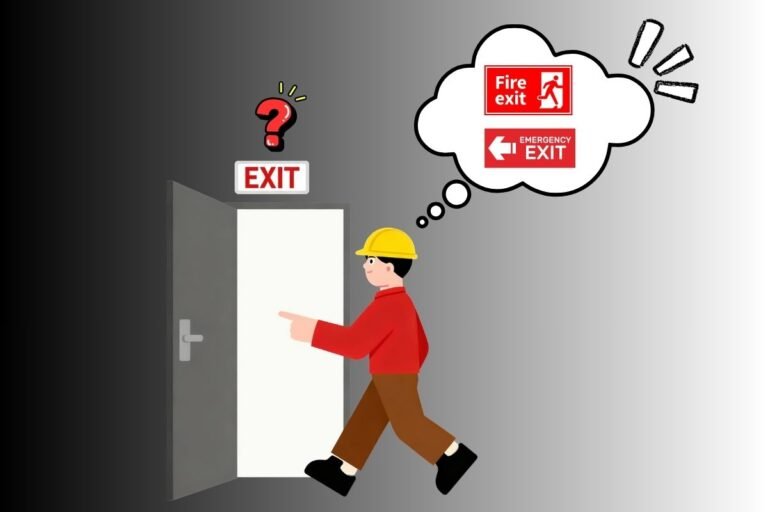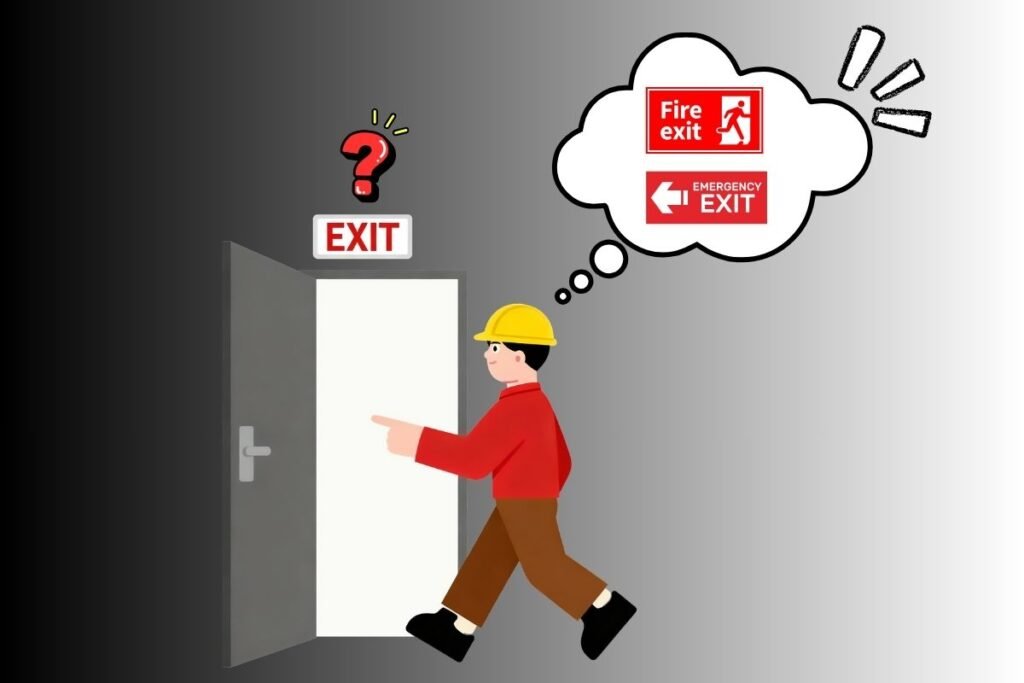
You’ve probably used both terms interchangeably without giving it much thought. Turns out, there’s actually a real difference worth knowing.
Let’s clear up the fire exit vs emergency exit confusion once and for all.
Fire Exit Explained
A fire exit is a specific route designed to get you out during a fire. It’s built with fire safety in mind, right down to the materials used.
These exits often lead through protected stairwells or corridors resistant to smoke and heat. This design keeps the escape route usable even as flames spread nearby.
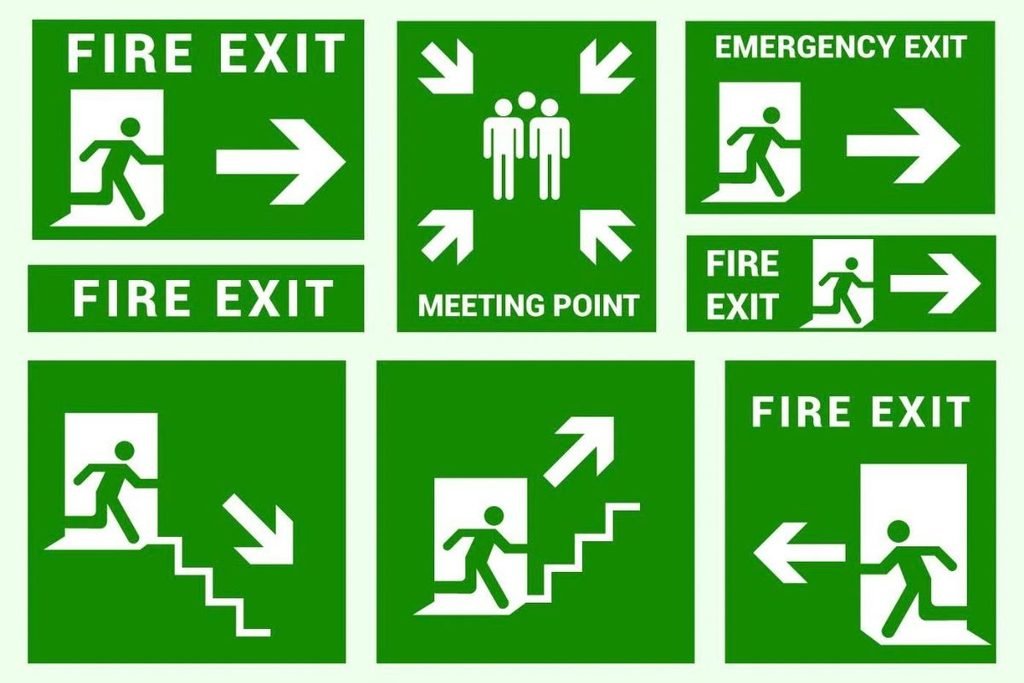
You’ll usually spot fire exits marked with illuminated signs, often glowing green or red. These signs stay visible even during power outages or heavy smoke.
Fire exits also connect directly to the outside or a safe refuge area. The goal is simple: get you away from danger as quickly and safely as possible.
Building codes typically require multiple fire exits based on occupancy size. This ensures everyone has a nearby route, even in crowded spaces.
Typical fire-exit features
- Fire-rated doors, walls, or protected enclosures along the route.
- Doors that can be opened quickly from the escape side, often with panic bars or push pads.
- Self-closing fire doors that limit the movement of smoke and flames.
- Emergency lighting and legible direction signs.
- A route that remains free of boxes, furniture, rubbish, equipment, and other obstructions.
- An exit discharge leading to a safe outdoor area or designated assembly point.
Emergency Exit Basics
An emergency exit, on the other hand, covers a much broader range of situations. Think earthquakes, gas leaks, chemical spills, or even security threats.
That could include:
- A fire or smoke incident.
- A gas leak.
- A chemical spill or hazardous-material release.
- An earthquake or structural concern.
- A bomb threat or security incident.
- Flooding, severe weather, or another external danger.
- A power failure combined with an unsafe building condition.
Not every emergency involves fire, but every building still needs safe ways out. That’s exactly where emergency exits come into play.
These exits might not always have the same fire-resistant construction as fire exits do. Their main purpose is simply providing a quick way outside during any crisis.
You’ll find emergency exits placed strategically throughout larger buildings and public spaces. Malls, offices, and stadiums often have several scattered across different areas.
Some emergency exits double as fire exits too, which adds to the confusion. But not all emergency exits meet the specific standards required for fire safety.
Key Differences between Fire Exit and Emergency Exit
Now let’s put these side by side, because the distinction genuinely matters.
Fire exits are specifically engineered to withstand fire conditions temporarily. Emergency exits, meanwhile, focus on general evacuation during any type of crisis.
Fire exits usually require stricter construction standards, like fire-rated doors and walls. Emergency exits don’t always need this same level of fire resistance.
Signage differs slightly too, though both typically use standardized international symbols. Fire exits often emphasize proximity to fire-resistant stairwells specifically.
Every fire exit technically counts as an emergency exit. But not every emergency exit qualifies as a proper fire exit.
Understanding fire exit vs emergency exit differences helps you make smarter decisions during any crisis. Knowing which route suits which emergency genuinely speeds up your response time.
| Feature | Fire exit | Emergency exit |
|---|---|---|
| Primary purpose | Escape from fire and smoke | Escape from any immediate danger |
| Hazards addressed | Fire, heat, and smoke | Fire plus gas leaks, chemical releases, security threats, structural hazards, and more |
| Fire-resistant construction | Often part of a protected fire-escape route | May or may not include fire-rated protection |
| Route design | Intended to remain usable during fire conditions for a limited time | Intended to support rapid evacuation during an emergency |
| Typical components | Fire doors, protected corridors, enclosed stairs, emergency lighting | Exit door, evacuation route, signage, panic hardware, access to a safe location |
| Relationship | Every fire exit is an emergency exit | Not every emergency exit necessarily meets all fire-exit requirements |
The simplest way to remember it is this:
A fire exit is a type of emergency exit, but an emergency exit is not always a fire exit.
Fire Door vs. Fire Exit
Another source of confusion is the fire door.
A fire door and a fire exit are not the same thing:
- A fire door is designed to slow the movement of fire and smoke between different parts of a building.
- A fire exit is a route or final door used to evacuate people to safety.
- An emergency exit is the broader evacuation concept that may cover many types of incidents.
For example, a fire-rated self-closing door between an office corridor and an enclosed staircase may be a fire door. The outward-opening final door at the bottom of that stairwell that leads outside may be the fire exit. Both are important, but they serve different jobs.
Some doors perform more than one function. A door may be fire-rated and also form part of an escape route—but it must be properly installed, maintained, unlocked for evacuation, and usable without special knowledge or a key.
Common Workplace Mistakes
Even with clear definitions, workplaces still get this wrong more often than you’d think.
One common mistake is blocking fire exits with boxes, furniture, or equipment. This happens gradually, often without anyone realizing the danger it creates.
Another mistake is failing to distinguish exits during safety training. Employees often assume all exits work the same way during emergencies.
Poor signage maintenance is another frequent issue. Faded, broken, or unlit exit signs become useless exactly when you need them most.
Locking emergency exits for “security reasons” is a dangerous and surprisingly common error. This defeats the entire purpose of having an accessible escape route.
Some workplaces also skip regular fire drills that specifically use fire exits. This leaves employees unfamiliar with the safest route during actual fire emergencies.
Lastly, many buildings forget to update exit signage after renovations. New layouts sometimes leave outdated signs pointing toward blocked or nonexistent exits.
Avoiding these mistakes starts with treating fire exit vs emergency exit distinctions seriously, not casually. Regular training, clear signage, and unobstructed pathways make all the difference when it counts.
Understanding these differences isn’t just technical knowledge, it’s genuinely practical safety awareness. Next time you walk into any building, you’ll know exactly which exit does what, and why that distinction matters more than you’d expect.
Major Mistakes
Blocking escape routes
Boxes, stock, furniture, cleaning equipment, bicycles, or temporary displays often accumulate near exits. What begins as “just for a few minutes” can become a permanent and life-threatening obstruction.
Escape routes – including corridors, stairwells, landings, and the space around exit doors—should remain clear at all times.
Locking or securing exit doors improperly
Security measures must not prevent people from escaping during an emergency. Exit doors should be operable from the inside without keys, tools, special codes, or lengthy procedures. Locks, chains, furniture, or access-control systems that delay escape create severe risk.
Treating every exit as identical
Not all routes are equally safe in every incident. During a fire, people should use the designated fire-escape route and avoid lifts unless emergency services explicitly direct otherwise. During a chemical incident or security threat, the correct route may depend on the location and nature of the danger.
Ignoring damaged signs or lighting
A faded sign, burned-out emergency light, malfunctioning panic bar, or warped door can turn a compliant route into an unusable one. Exit signs and emergency lighting matter most when visibility is poor, power is unavailable, or occupants are unfamiliar with the building.
Holding open fire doors
Fire doors are sometimes wedged open for convenience, ventilation, or easier movement of goods. But a fire door that cannot close cannot help contain smoke and flames. If a door is intended to be held open operationally, it should use an approved device that releases it automatically when the fire alarm activates.
Failing to update plans after renovations
Renovations can change wall layouts, room use, occupant capacity, door swings, and travel paths. An old “EXIT” sign may end up pointing toward a storage room, a locked door, or a route that no longer provides safe escape. Evacuation maps, signs, emergency lighting, and staff training should be reviewed whenever the building layout changes.
Skipping drills and visitor procedures
People often know their usual entrance but not the nearest safe exit. Regular drills help staff recognise alarms, locate alternative routes, assist visitors, and understand where to assemble after evacuation.
What To Do in an Emergency
If you need to evacuate:
- Leave immediately when an alarm sounds or when instructed to do so.
- Follow marked routes, emergency announcements, and directions from trained staff or emergency responders.
- Use stairs rather than lifts during a fire unless authorities specifically tell you otherwise.
- Do not stop to collect bags, equipment, or personal belongings.
- Help others only if it is safe to do so and you do not delay evacuation.
- Close doors behind you if possible, but do not lock them.
- Move to the designated assembly point or another safe area away from the building.
- Do not re-enter until authorised personnel declare it safe.
If smoke is present, stay low where practical, avoid opening doors that feel hot or have smoke coming through them, and take an alternative route if your primary route is unsafe.
Bottom Line
A fire exit is specifically designed to help people escape the risks of fire and smoke. An emergency exit is a broader evacuation route that may be used during many kinds of crises.
Knowing the distinction helps people make better decisions, but the immediate priority is always the same: leave by the safest available route, keep exits clear, follow official instructions, and do not re-enter until authorities say it is safe.