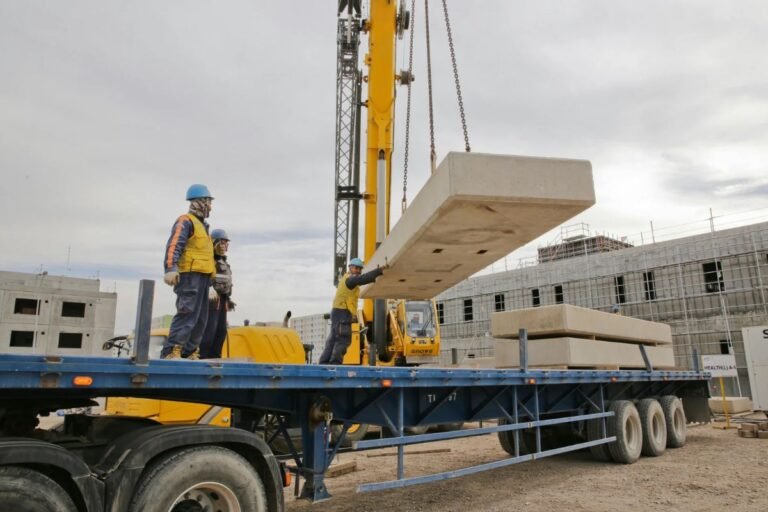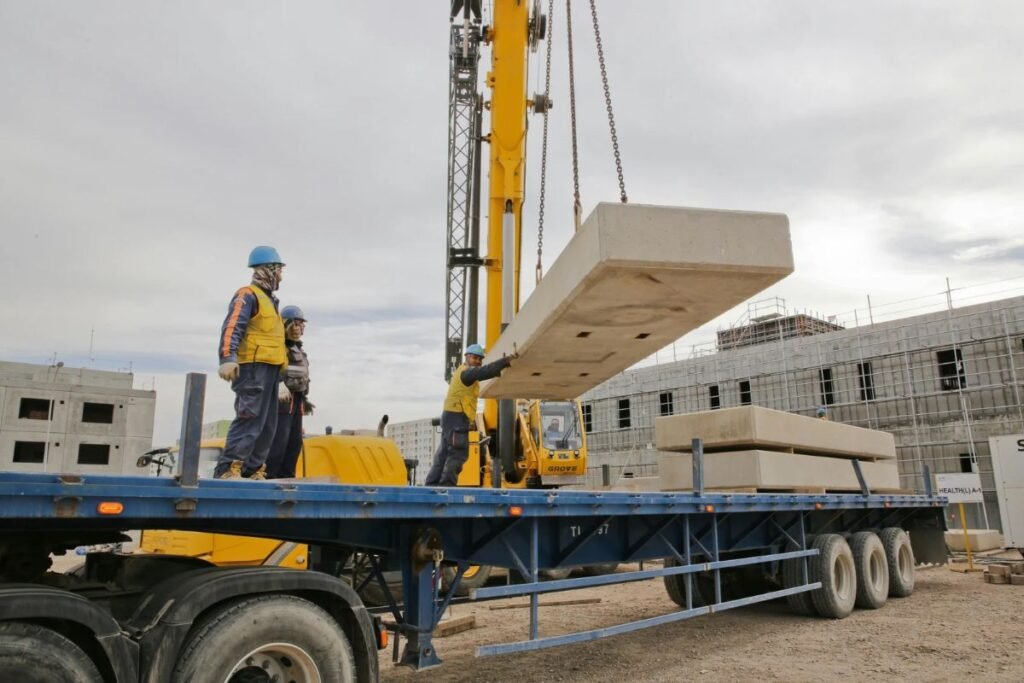
A crane lifts a steel beam, and for a few seconds everything on the site seems to stop. Workers look up, and nobody stands underneath. In those quiet seconds, one weak sling or one wrong signal can turn a routine job into a tragedy.
Lifting looks simple from the ground, but every lift depends on planning, the right equipment, and people who know exactly what they’re doing. Let’s look at the 12 common lifting methods used in construction and industry, and how to keep each one safe.
1. Single Lifting
A single lift uses one crane to raise and move one load. It’s the most common and most straightforward method.
Best for: Loads within the crane’s rated capacity that are stable and easy to rig.
Safety points:
- Confirm the load weight and the crane’s capacity at the working radius
- Inspect slings, shackles, and hooks before the lift
- Keep the area below the load clear
2. Tandem Lifting
Tandem lifting uses two cranes working together to lift one load. Both cranes share the weight.
Best for: Heavy, long, or unbalanced loads that one crane can’t handle safely.
Safety points:
- Plan the load share between cranes in advance
- Keep one competent person in charge of signals
- Make sure both operators move in perfect coordination
- Account for the loss of capacity when two cranes work together
This is a critical lift. It needs detailed planning and a stricter approval process.
3. Dual Lifting
Dual lifting uses two lifting points on the same crane, such as a dual hook or block, to lift a single load.
Best for: Loads that need two attachment points for balance, but are still within one crane’s capacity.
Safety points:
- Check that both hooks and lines are rated for their share of the load
- Keep the load level to prevent uneven stress
- Use the correct sling angles
4. Multi-Crane Lifting
Multi-crane lifting uses more than two cranes to lift very heavy or complex loads. Large modules and oversized structures often need this method.
Best for: Very large loads that no single or tandem arrangement can handle.
Safety points:
- Prepare a detailed engineered lift plan
- Assign one lift director and clear communication channels
- Rehearse the lift and confirm ground conditions for every crane
- Set clear stop-work rules if anything changes
The more cranes involved, the more can go wrong. Planning and communication matter most here.
5. Tailing Lifting
Tailing controls the movement of a load during lifting, slewing, and positioning. Many sites use tag lines (tailing ropes) for this purpose. On large lifts, a second crane may also tail the base of a long item.
Best for: Long or tall loads that need controlled rotation and direction.
Safety points:
- Use tag lines long enough to keep workers clear of the load
- Never wrap tag lines around hands or wrists
- Brief the crew on who controls each line
6. Tilting Lifting
Tilting lifts rotate a load from horizontal to vertical, or the other way around. The load pivots at one end while the other end is raised.
Best for: Vessels, columns, tanks, and pipe sections that are fabricated flat but installed upright.
Safety points:
- Calculate how the load shifts as it rotates
- Check hook loads at every stage of the tilt
- Keep people away from the pivot point and path of travel
7. Erection Lifting
Erection lifting places structural elements into their final position. This includes columns, beams, vessels, and modules.
Best for: Building structures, plant equipment, and steel frameworks.
Safety points:
- Make sure supports and anchor points are ready before the lift
- Use secure temporary connections before releasing the load
- Provide safe access for workers who guide and fix the item
8. Positioning Lifting
Positioning lifting moves a load to its exact final place using slow, controlled crane movements.
Best for: Placing equipment on foundations, bolting machinery in place, and fitting items into tight spaces.
Safety points:
- Move slowly, with a trained signaller guiding
- Keep hands and feet out of pinch points
- Watch for nearby obstacles, cables, and structures
9. Skidding Lifting
Skidding involves lifting the load slightly, then moving it on skids or rollers to its position. Strictly speaking, much of the movement happens on the ground rather than in the air.
Best for: Heavy equipment that needs to move short distances over a prepared surface.
Safety points:
- Check the skid track is level, firm, and clear
- Control the pushing or pulling force carefully
- Keep people away from the load’s path and from crush points
10. Lock and Lift (Pick and Carry)
In this method, the crane picks up the load and carries it to another location. It’s often called pick and carry.
Best for: Moving loads across a site when a fixed crane position isn’t practical.
Safety points:
- Keep the load as low as possible while travelling
- Move slowly on a firm, level, and prepared route
- Check the crane’s rated capacity for travelling with a load, which is often lower than for stationary lifting
11. Floating Lifting
Here, the load is lifted just above the ground and held while the crew makes adjustments before the final move.
Best for: Checking balance, fine-tuning rigging, and confirming the load is secure before the main lift.
Safety points:
- Keep the lift height minimal and the pause short
- Stop and lower the load if anything looks wrong
- Keep everyone out of the possible fall zone
Experienced crews often do this as a test lift before the actual move.
12. Walking Lifting
Walking lifting moves a load in small steps, often with tag lines guiding it. Think of the load “walking” toward its final location.
Best for: Short, careful movements where precise control matters.
Safety points:
- Use tag lines and stay clear of the load’s swing path
- Take small steps and pause between movements
- Keep clear communication between the operator and signaller
Quick Comparison Table
| # | Lifting Method | Key Feature | Typical Use |
|---|---|---|---|
| 1 | Single Lifting | One crane, one load | Standard loads |
| 2 | Tandem Lifting | Two cranes together | Heavy, long, or unbalanced loads |
| 3 | Dual Lifting | Two points, one crane | Balanced loads within one crane’s capacity |
| 4 | Multi-Crane Lifting | More than two cranes | Very heavy modules |
| 5 | Tailing Lifting | Controlled movement with tag lines | Long or tall loads |
| 6 | Tilting Lifting | Horizontal to vertical rotation | Vessels, columns, tanks |
| 7 | Erection Lifting | Placing structures in position | Columns, beams, modules |
| 8 | Positioning Lifting | Precise final placement | Equipment on foundations |
| 9 | Skidding Lifting | Moving on skids or rollers | Short-distance heavy moves |
| 10 | Lock & Lift (Pick and Carry) | Crane carries the load | Site movement |
| 11 | Floating Lifting | Hold just above ground | Test lifts and adjustments |
| 12 | Walking Lifting | Small guided steps | Controlled short moves |
Safety Rules That Apply to Every Lift
No matter which method you use, these basics stay the same.
- Prepare a lift plan: Cover the load weight, crane capacity, rigging, ground conditions, and weather
- Classify the lift: Treat tandem, multi-crane, and other complex lifts as critical lifts
- Use competent people: Operators, riggers, and signallers should be trained and authorized
- Inspect everything: Check cranes, slings, hooks, and shackles before use
- Set up an exclusion zone: Keep unauthorized people away from the lifting area
- Hold a pre-lift briefing: Make sure everyone knows their role and the stop signals
- Monitor the weather: Stop work if wind or visibility goes beyond safe limits
- Never stand under a suspended load
A permit to work or lifting permit often applies to higher-risk lifts, depending on site rules.
Common Mistakes to Avoid
- Guessing the load weight instead of confirming it
- Ignoring the crane’s capacity at the working radius
- Skipping inspection of lifting gear
- Using damaged slings or the wrong sling angle
- Poor communication between operator and signaller
- Lifting on soft or uneven ground
- Treating a complex lift like a routine one
Frequently Asked Questions
Final Thoughts
A crane lift is only as safe as the planning behind it. Each of these 12 methods suits a different job, and choosing the wrong one puts people and equipment at risk.
Know the method, plan the lift, and communicate clearly. Do that consistently, and heavy lifting becomes a controlled, predictable operation instead of a gamble.
FAQ’s
Lifting is raising, lowering, or moving a load using a crane, hoist, or other lifting equipment. In construction and industry, it usually means moving heavy items that people can’t safely handle by hand.
A lifting operation covers the whole job, from planning and rigging to the lift itself and setting the load down. It includes the equipment, the people, and the safety controls.
A sling is a flexible lifting accessory that connects a load to the crane’s hook. It carries the weight of the load while it is lifted. Slings are made from materials such as wire rope, chain, synthetic webbing, or round synthetic fibre.
A sling wraps around or attaches to the load. A shackle is a metal connector that joins the sling to the load or to the hook.
A rigger is a trained person who selects the slings, attaches the load, and prepares it for the lift. They work closely with the crane operator and signaller.
The safe working load is the maximum load a piece of lifting gear can safely carry. Modern standards often use the term working load limit (WLL). The rating is marked on the equipment, and you should never exceed it.
Sling angle is the angle between the sling legs and the horizontal. The smaller the angle, the more tension the sling carries. A wide, low angle can overload a sling even when the load itself is light.
Remove a sling from service if it shows cuts, broken wires or stitching, kinks, heat damage, chemical damage, stretching, or missing identification tags. When in doubt, take it out of use and have a competent person inspect it.
Check them visually before every use. Formal thorough examinations are required at set intervals, which depend on local regulations such as LOLER in the UK or equivalent rules where you work.
A tag line is a rope attached to the load. Workers use it to control rotation and swing from a safe distance.