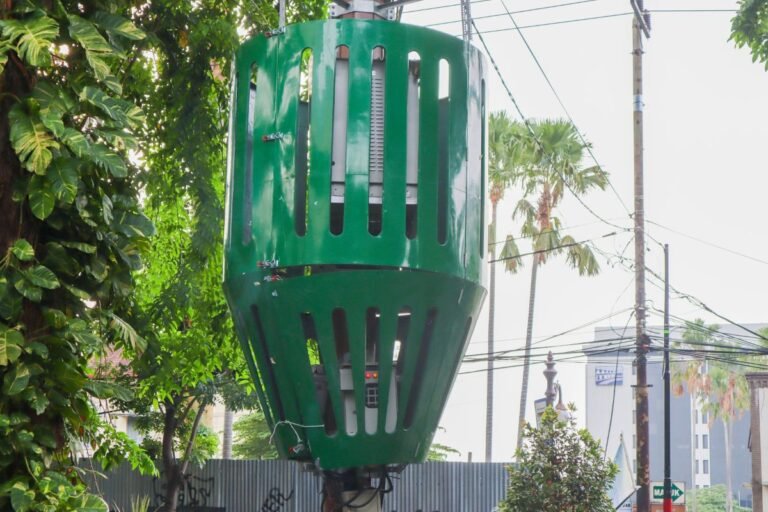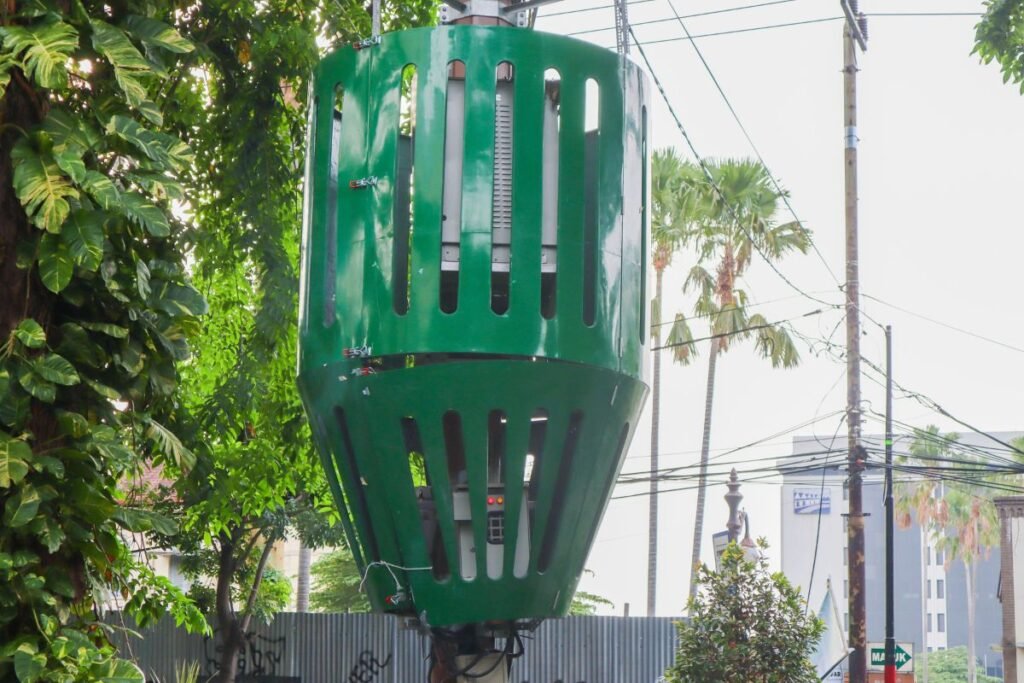
Ever walked past a utility pole and noticed a metal box wrapped in iron mesh or bars? That’s a pole-mounted transformer, and it’s doing far more work than most people realize.
You’ve probably seen one just like this near your own street. A recent photo from Surabaya, Indonesia, captured on March 6, 2024, shows exactly this setup, a transformer sitting on a pole, wrapped in protective iron casing.
Let’s talk about why this protective covering exists, and why it matters way more than it looks.
What is a Pole Mounted Transformer?
Pole-mounted transformers reduce high-voltage electricity to usable voltage for homes, businesses, and industries. They are compact, reliable, and commonly used in rural and suburban power distribution.
Unlike ground-mounted transformers, they are installed on utility poles, saving ground space and reducing direct public access. Proper earthing, clearances, warning signs, and maintenance are still essential for safety.
What Exactly Is a Pole-Mounted Transformer?
A pole-mounted transformer converts high-voltage electricity into a lower voltage safe for homes and businesses. You’ll find these mounted on utility poles across cities, towns, and rural areas alike.
They’re compact, efficient, and easy to install compared to ground-mounted alternatives. That’s exactly why you’ll spot them so often along streets and neighborhoods.
But here’s the thing: these devices carry serious electrical risk. Without proper protection, they become a hazard to anyone nearby.
Why the Protective Iron Casing Actually Matters
That metal guard around the transformer isn’t just for looks. It serves several genuinely important safety functions.
It keeps people at a safe distance. Curious hands, climbing kids, or careless passersby can’t accidentally touch live components. The barrier physically prevents direct contact with dangerous parts.
It protects against physical damage. Falling branches, vehicle collisions, or accidental impacts can seriously damage exposed equipment. A sturdy iron guard absorbs this impact instead of the transformer itself.
It reduces vandalism and tampering risk. Unprotected electrical equipment is vulnerable to interference, whether intentional or accidental. A protective enclosure makes tampering much harder.
It helps contain potential failures. If something does go wrong internally, like a fault or overheating, the casing helps limit the immediate danger zone around it.
Simply put, that “cage” you barely notice is quietly preventing accidents every single day.
The Real Hazards of Unprotected Transformers
Without proper protective measures, pole-mounted transformers can pose genuine dangers.
Electrical shock is the most obvious risk. Even brief contact with exposed components can cause serious injury or death.
Fire hazards also increase significantly without proper enclosures. Overheating components, sparking, or short circuits can ignite nearby debris or vegetation.
There’s also the risk to wildlife. Birds and small animals sometimes cause outages or get injured when accessing unprotected equipment.
And let’s not forget public safety around curiosity. Children especially are drawn to unusual-looking equipment, making unprotected transformers a real accident waiting to happen.
Pros and Cons of Protective Transformer Casings
Like most safety measures, these guards come with clear upsides and a few trade-offs worth knowing.
| Pros | Cons |
| Prevents electrical shock and death. This is the single biggest benefit. Physical barriers stop accidental contact with live components entirely. | Higher upfront installation cost. Protective casings and mounting hardware add to the overall project budget. |
| Reduces fire and short-circuit risks. Enclosures keep debris, nesting animals, and moisture away from sensitive internal parts. | Maintenance access can be slower. Technicians sometimes need extra time to open or remove guards before servicing equipment. |
| Protects against physical damage. Vehicle impacts, falling branches, and storms cause far less damage to a protected unit. | Visual clutter in some areas. Heavier casings can look bulkier on poles, which some communities consider an aesthetic downside. |
| Deters tampering and vandalism. A sturdy casing makes unauthorized access significantly harder for both people and wildlife. | Not always a complete solution. Casings reduce risk but don’t eliminate it entirely; poor installation or damaged guards can still leave gaps in protection. |
| Extends equipment lifespan. Less exposure to weather and interference means fewer repairs and replacements over time. | Even with these trade-offs, safety experts widely agree the benefits far outweigh the downsides. |
The Real Benefit of Introducing This Safety Measure
So why did utility companies start adding these guards in the first place? It largely comes down to lessons learned the hard way.
As electrical grids expanded through the 20th century, incidents involving accidental contact, animal interference, and storm damage became too frequent to ignore. Protective casings emerged as a practical, low-cost fix that dramatically reduced these incidents.
The core benefit is simple: prevention costs far less than the aftermath. A single electrical accident can mean injury, legal liability, power outages, and expensive repairs. A protective guard, by comparison, is a one-time investment that keeps paying off.
It’s a great example of how a small design choice can create a massive real-world safety impact.
Pole-Mounted Transformer vs Ground-Mounted Transformer
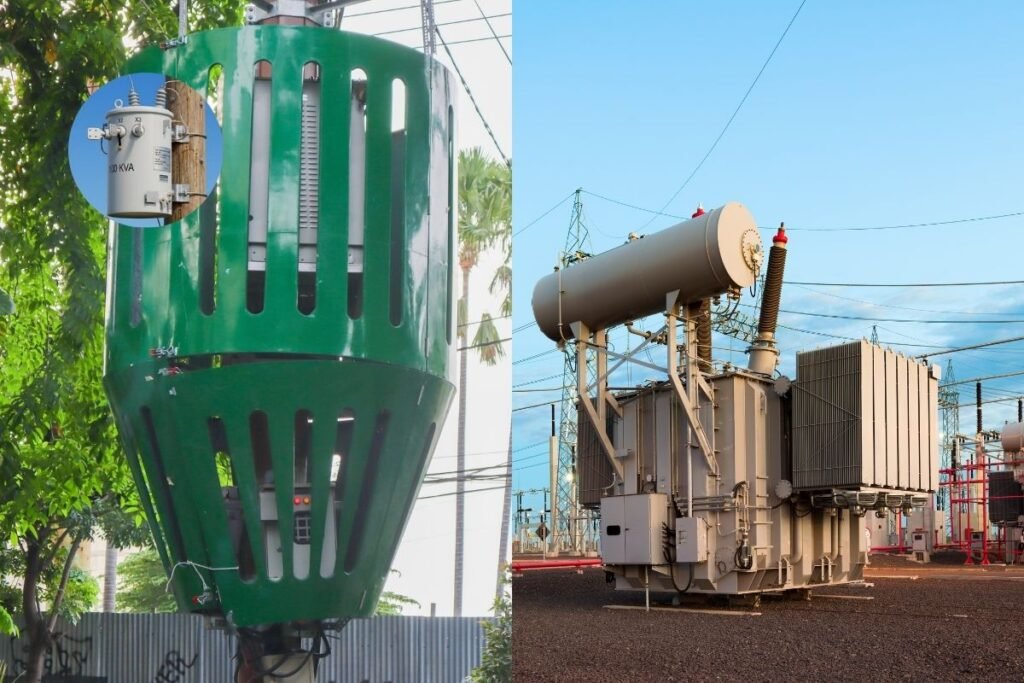
The main difference is where the transformer is installed and how the surrounding safety controls are managed. A pole-mounted transformer is elevated above the ground, while a ground-mounted transformer is installed at ground level on a prepared foundation.
For either type, safety depends on more than the physical installation. Proper earthing, electrical clearances, insulation, overcurrent protection, warning signs, restricted access, inspection, and preventive maintenance are important.
Simple example:
- Pole-mounted: Common for supplying electricity to homes along streets.
- Ground-mounted: Common where a factory, commercial building, or other facility requires a larger electrical supply.
Which Countries Use This Type of Protection?
Here’s an important, honest note: there isn’t one single country credited with “inventing” transformer protective casings. This is a practice that developed gradually and independently across the global electrical industry, as different utility providers responded to similar risks.
That said, protective enclosures and guards for pole-mounted or ground-mounted transformers are used widely across many countries, including the United States, Indonesia, India, South Africa, New Zealand, and much of Europe. Local standards vary, but the underlying safety principle stays the same everywhere: keep people and wildlife away from live electrical components.
In some regions, protection also extends to guarding against animals like squirrels and birds, which can cause outages by nesting near or chewing through equipment. So depending on where you are, that iron casing might be doing double duty, protecting both people and the power grid itself from unexpected interference.
Safety Standards Behind These Installations
Utility companies don’t just add protective casing randomly. Most follow specific electrical safety codes and standards for equipment placement and protection.
These standards typically cover minimum height requirements for transformer placement. This keeps them out of easy reach from the ground.
They also specify clearance distances from buildings, trees, and walkways. This reduces risks from nearby vegetation or structures.
Protective barriers, warning signage, and insulation requirements are usually mandated too. Together, these measures create multiple layers of protection, not just one.
What This Means for Everyday Safety Awareness
You don’t need to be an electrician to benefit from understanding this. A little awareness goes a long way in staying safe around electrical infrastructure.
Never attempt to climb, touch, or interfere with any pole-mounted equipment. Even equipment that looks sturdy can carry lethal voltage internally.
Report any visible damage to protective casings immediately. A damaged guard means reduced protection, and utility companies need to know quickly.
Teach children to treat all electrical equipment as strictly off-limits. Curiosity is natural, but electrical hazards don’t forgive mistakes.
Keep flammable materials and debris clear of transformer bases wherever possible. This simple habit reduces fire risk around these installations.
Final Thoughts
That unassuming metal box on the pole outside your window is doing serious safety work. The protective iron casing around it isn’t decoration, it’s a genuine barrier between everyday life and real electrical danger.
Next time you spot one, whether in Surabaya or your own neighborhood, you’ll know exactly why it looks the way it does. Sometimes the most overlooked pieces of infrastructure are the ones quietly keeping us safe.
FAQ’s
A pole-mounted transformer converts high-voltage electricity into a lower, safer voltage for homes and businesses. It’s mounted on utility poles across streets and neighborhoods.
The casing prevents accidental contact with live electrical parts. It also protects against physical damage, weather, and tampering.
No, you should never touch any part of a transformer, even if it looks sturdy or fully enclosed. It can carry lethal voltage internally at all times.
A pole-mounted transformer sits elevated on a utility pole, while a ground-mounted transformer sits on a foundation at ground level. Pole-mounted units typically serve homes, while ground-mounted ones often serve factories or large facilities.
A damaged casing means reduced protection against shock, weather, and tampering. You should report any visible damage to the utility company immediately.
Yes, birds and small animals like squirrels can trigger outages or get injured accessing unprotected equipment. Protective casings help guard against this in many regions.
Standards typically cover minimum mounting height, clearance from buildings and trees, insulation, and warning signage. These create multiple layers of protection together.
No single country invented this practice; it developed independently across the global electrical industry. Countries like the US, Indonesia, India, South Africa, and parts of Europe all use some form of protective enclosure, though standards vary.
Keep your distance and avoid touching or approaching it. Report it immediately to your local utility provider or electricity board.
Both. While their main purpose is preventing shock and accidents, they also reduce weather exposure and physical damage, which extends the equipment’s lifespan.