Understanding Transmission Line Construction Safety
Transmission line construction is an important job that keeps homes, businesses, and industries connected to reliable electricity. You may work around towers, cables, heavy machinery (Tensioner and Puller), electrical equipment, and challenging outdoor conditions. That combination makes proper safety planning (SOP) essential throughout every stage of the project.
Before work begins, you should identify potential hazards (HIRA) and decide how to control them. Your safety planning should cover surveying, excavation, foundation work, tower erection, and stringing. Each activity brings different hazards, so you need controls through proper SOP (Safe Operating Procedure).
Electrical hazards require special attention because transmission systems can carry extremely high voltages. You should maintain safe distances from energized equipment and overhead conductors during crossing line or near by work of distribution line like (11 kV, 33 kV).
Under the supervision of a Safety Officer, all activities should be carried out by trained and authorized workers, especially electrical work around transmission systems.
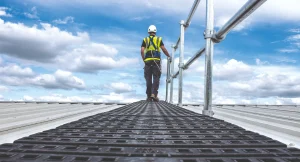
WAH (Working at height) is another major concern during transmission tower construction. You may need to climb towers, use ladders, or work from elevated platforms. A small mistake at height can quickly turn into a serious accident. You should always use suitable fall protection equipment when working at height.
Harnesses, lifelines, anchor points, and other protective systems should be inspected before use. You should also check that workers understand how their fall protection equipment works. A safety harness cannot protect you effectively when it is incorrectly fitted or attached.
Protecting Workers During Outdoor Work
Plan outdoor working hours: Transmission line projects usually happen outdoors, where workers face changing weather conditions. Workers may start shifts between 7–8 AM and continue until 6–7 PM in India.
Provide afternoon rest: In hot regions like Tamil Nadu, Gujarat, and Rajasthan, schedule adequate afternoon rest. This helps workers avoid peak sunlight and extreme temperatures.
Control sun exposure: Strong sunlight can increase the risk of dehydration, fatigue, heat stress, and skin damage. Proper planning can reduce these risks during long outdoor shifts.
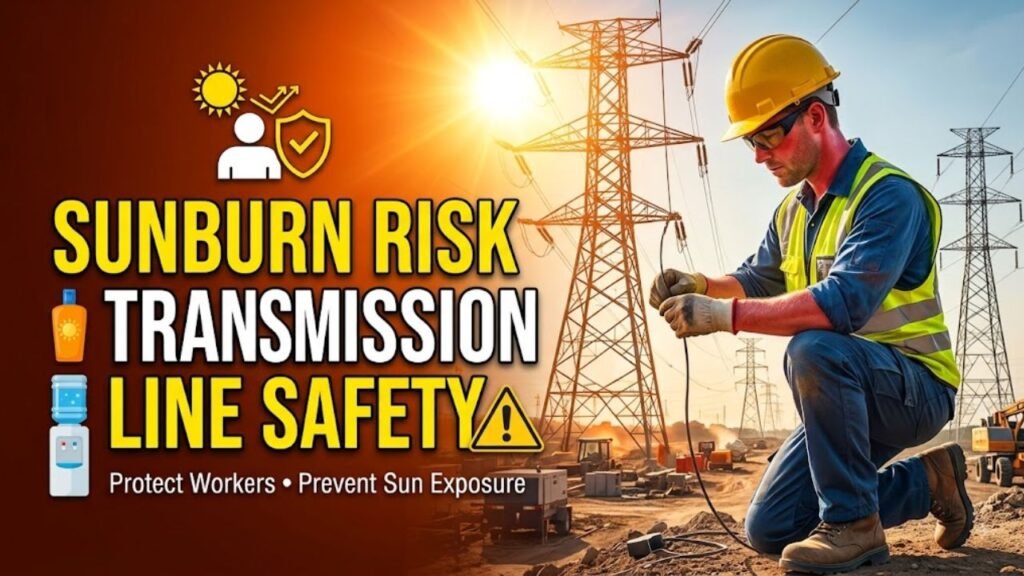
Manage the Risk of Sunburn: The Risk of Sunburn is sometimes overlooked during tower erection and stringing activities. Fitters may spend several hours climbing towers or working under direct sunlight.
Monitor ultraviolet exposure: Workers can receive significant ultraviolet exposure during long outdoor shifts. Supervisors should encourage suitable protective measures throughout the working period.
Address safety instruction violations: On some projects, work crews, including Malda Gang and Bihar Gang, may occasionally fail to follow supervisors’ safety instructions. The Safety Officer should involve management when repeated non-compliance occurs.
Maintain workplace discipline: Management involvement can help control inappropriate behavior and improve cooperation between workers and supervisors. Every worker should follow established safety procedures without exception.
Use protective clothing: Workers should wear suitable protective clothing whenever working conditions allow. Long-sleeved clothing can reduce direct sunlight exposure on the arms and shoulders.
Protect the head and face: A safety helmet provides essential protection during construction activities. Suitable additional protection can help reduce direct sunlight exposure to the head and face.
Use sunscreen: Workers should apply suitable sunscreen to exposed skin before starting outdoor activities. Reapplication may be necessary during long shifts, particularly when sweating reduces its effectiveness.
Provide shaded rest areas: Workers should have opportunities to take regular breaks away from direct sunlight. Shaded areas can provide valuable relief during demanding outdoor activities.
Maintain proper hydration: Provide clean drinking water at convenient locations throughout the worksite. Hot weather can increase sweating and cause dehydration faster than workers may expect.
Encourage regular water intake: Workers should drink water regularly instead of waiting until they feel extremely thirsty. Proper hydration supports concentration, energy, and physical performance.
Monitor heat stress: Supervisors should watch workers for possible signs of heat stress during hot conditions. Early action can help prevent more serious heat-related problems.
Control fatigue: Fatigue can reduce concentration during critical construction activities. Tired workers may also make mistakes while climbing towers or operating equipment.
Schedule planned rest periods: Short, planned rest periods can help workers remain alert throughout their shifts. Proper rest also supports safer decision-making during physically demanding transmission line activities.
Safe Use of Construction Equipment
Transmission line construction often requires cranes, excavators, vehicles, lifting equipment, and specialized tools. These machines can create serious hazards when they are operated without proper training. You should allow only trained and competent workers to operate construction machinery.
Before using equipment, operators should complete appropriate pre-use inspections. They should check controls, brakes, tires, alarms, lifting systems, and visible signs of damage. Any defective equipment should be reported and removed from service until properly repaired.
Lifting operations require careful planning because tower sections can be heavy and difficult to control. You should confirm the load weight before selecting suitable lifting equipment. Operators should understand the safe working load and operating limits of their equipment.
Workers should never stand beneath suspended loads during lifting activities. A falling component can cause serious injuries within a very short time. You should establish clear exclusion zones around active lifting operations.
Good communication between crane operators and ground workers is equally important. You should use agreed signals or reliable communication systems during lifting activities. Everyone should understand the lifting plan before the operation begins.
Vehicles can also create risks across large transmission line construction sites. Site roads may be uneven, narrow, muddy, or difficult to navigate safely. Drivers should follow site speed limits and use designated routes whenever possible.
Seat belts should be used whenever workers travel inside site vehicles. You should also separate pedestrian routes from vehicle movement whenever site conditions allow it.
Excavation and Foundation Safety
Transmission towers require strong foundations, which often involve excavation and ground preparation. Excavation areas should be inspected carefully before workers enter or approach them. You should consider soil conditions, underground services, water, nearby structures, and equipment movement.
Proper barriers can prevent workers from accidentally entering dangerous excavation areas. Access points should remain clear and suitable for workers and equipment. You should never assume that stable-looking soil is automatically safe.
Workers should also keep heavy machinery away from excavation edges when required. Excessive loads near an excavation can increase the chance of ground collapse. Your site team should follow the approved excavation control measures throughout the activity.
Safe Tower Erection and Material Handling
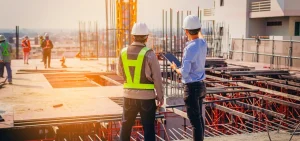
Tower erection requires careful coordination because multiple workers and machines may operate together. You should establish a clear work sequence before starting each lifting operation. Every worker should understand their responsibility and communication method before work begins.
Materials should be secured properly while workers perform activities at height. Loose tools or components can fall and seriously injure people working below. You should use suitable tool lanyards and controlled material handling methods.
Good housekeeping can make these activities safer and easier for everyone. Keep tools, cables, packaging, and construction debris away from walking routes. A tidy worksite gives you fewer opportunities to trip, slip, or fall.
Creating a Strong Transmission Line Safety Culture
Safety should remain part of everyday construction work rather than becoming a last-minute requirement. You should include safety discussions in daily meetings and toolbox talks. These short discussions can help workers understand changing hazards before starting their tasks.
Regular inspections can identify unsafe conditions before they become serious incidents. Supervisors should encourage workers to report hazards as soon as they notice them. You should create an environment where workers feel comfortable raising genuine safety concerns.
Emergency preparedness is another important part of transmission line construction safety. Your team should understand procedures for electrical incidents, falls, fires, injuries, and other emergencies. Workers should know emergency contacts, evacuation routes, and designated assembly points.
First-aid facilities should remain accessible throughout the project. Emergency equipment should also be checked regularly to ensure it remains ready for use. Rescue planning becomes especially important when workers perform tasks at significant heights.
Remember that transmission line safety involves much more than controlling electrical hazards. You should also manage sunlight, heat, dehydration, fatigue, falls, machinery, lifting, and excavation risks. Even the Risk of Sunburn deserves attention during long outdoor construction shifts.
When you manage these risks properly, your workers can perform their jobs with greater confidence. A practical safety culture protects your team while helping you maintain productivity and project quality.