Not every lifting job looks the same. One day you’re placing a pipe along a city road. The next, you’re lifting steel on soft ground, or repairing a railway track.
Different jobs and different terrains need different cranes. Pick the wrong one, and you risk delays, damage, or a serious accident.
Mobile cranes are built to move from one location to another. You’ll see them on construction sites, in industry, in transport yards, and in all kinds of lifting operations.
Let’s go through five common types of mobile and specialized cranes, where each one fits best, and the safety checks you need before any lift.
1. Truck-Mounted Crane
A truck-mounted crane has its lifting equipment fixed on a truck chassis. That means you can drive it to the job and set it up quickly.
Key features:
- Mounted on a truck chassis for easy transport
- Quick setup at the site
- Moves on public roads between locations
Best for:
- General lifting tasks
- Short-term projects
- Urban and road-based operations
Why people choose it: You don’t need a separate vehicle to carry it. That saves time on jobs that move from site to site.
Watch out for: Outriggers must be set correctly on firm ground. Road-based cranes still need a level, stable footing before lifting.
2. Crawler Crane
A crawler crane sits on continuous tracks, like a tank. The tracks spread its weight over a large area.
Key features:
- Mounted on crawler tracks
- High stability
- Good mobility on rough terrain
Best for:
- Heavy lifting
- Large-scale projects
- Sites with soft, uneven, or rough ground
Why people choose it: The wide tracks give strong stability, so these cranes can handle big loads where wheeled cranes struggle.
Watch out for: They move slowly and often need special transport to reach the site. Ground bearing capacity still matters, because heavy loads put heavy pressure on the soil.
3. Pick-and-Carry (Hydra) Crane
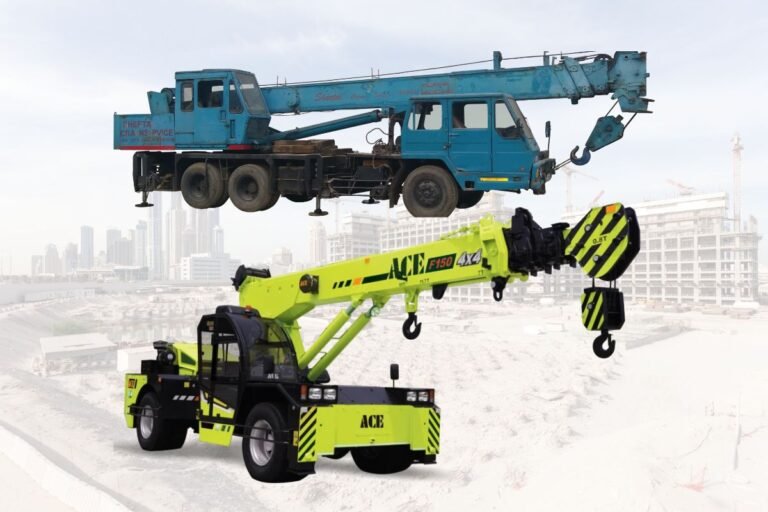
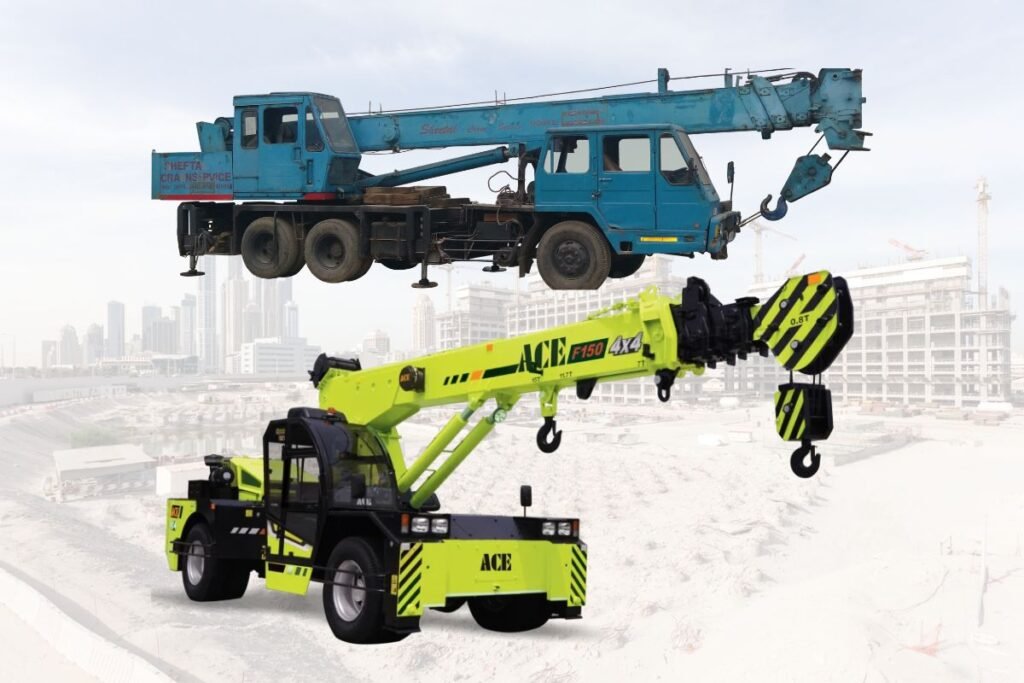
A pick-and-carry crane is a compact crane with a hydraulic telescopic boom. In India, many people call these “Hydra” cranes. Names and designs can vary by region and manufacturer.
Key features:
- Hydraulic telescopic boom
- Compact and versatile
- Can pick a load and move it over short distances
Best for:
- Material handling
- Moving loads across short distances on site
- Indoor and outdoor operations, within manufacturer limits
Why people choose it: It’s handy in yards, workshops, and factories where space is tight and loads are moderate.
Watch out for: Carrying a load changes how the crane behaves. Travelling with a load usually has stricter limits than a stationary lift, so follow the manufacturer’s load chart and keep the load low. Don’t push past rated limits because the crane is “small and handy.”
4. Railroad Crane
A railroad crane runs on railway wheels, so it moves along tracks instead of roads or open ground.
Key features:
- Mounted on railway wheels
- Moves along rail tracks
Best for:
- Maintenance and repair of railway tracks
- Construction work on railway lines
- Recovery and clearing work on tracks
Why people choose it: It can reach work areas along the track without needing road access.
Watch out for: Rail work has its own strict rules. You’ll typically need track access permissions, coordination with rail operations, and special safety controls for moving trains and overhead lines.
5. All-Terrain Crane
An all-terrain crane combines road travel with off-road ability. It can drive at road speeds between sites and then handle rougher ground when it gets there.
Key features:
- Road mobility and off-road capability
- Works in a wide range of terrains
Best for:
- A wide range of lifting jobs
- Projects that cover different locations or ground types
- Sites where road access and rough terrain both come into play
Why people choose it: It’s flexible. One machine can cover many job types, which reduces the need for multiple cranes.
Watch out for: Off-road ability doesn’t cancel the need for ground checks. Soft or uneven ground can still cause instability if you skip the assessment.
Quick Comparison
| Crane Type | Mounted On | Best For | Main Strength |
|---|---|---|---|
| Truck-mounted | Truck chassis | General lifting, short-term, urban work | Easy transport and quick setup |
| Crawler | Crawler tracks | Heavy lifting, large projects, rough terrain | High stability |
| Pick-and-carry (Hydra) | Compact chassis with hydraulic telescopic boom | Material handling, short-distance moves | Compact and versatile |
| Railroad | Railway wheels | Railway maintenance and construction | Moves along tracks |
| All-terrain | Multi-axle carrier | Varied terrains and applications | Road and off-road mobility |
How to Choose the Right Crane
Choosing the right crane starts with the job. Ask yourself a few questions.
- How heavy is the load? Check the real weight, not a guess.
- How far does it need to reach? Working radius changes capacity.
- What’s the ground like? Soft, uneven, and paved surfaces need different solutions.
- Is the site tight or open? Space affects crane size and setup.
- How long is the job? Short jobs and long projects favor different cranes.
- Does the crane need to travel with the load? Some cranes handle this better than others.
- Are there special conditions? Rail corridors, overhead lines, or indoor spaces add extra limits.
HSE Reminder: Choosing the Crane Is Only Step One
The right crane doesn’t make a lift safe on its own. Before any lifting operation, make sure you have these in place.
1. An approved lifting plan. Every lift should have a plan that fits the job and its risks.
2. Verified load weight, working radius, and crane capacity. Don’t assume. Check the load chart for the exact configuration you’ll use.
3. Ground bearing capacity and outrigger requirements. Assess the ground, use proper pads or mats, and set outriggers as required.
4. Inspected crane, accessories, and safety devices. Check the crane, slings, shackles, hooks, limit switches, and alarms before use.
5. Competent personnel. Use a trained operator, a qualified rigger, and a designated signaller. Make sure communication is clear.
6. Manufacturer’s load chart and site-specific safety rules. Follow them every time, including weather limits and exclusion zones.
Common Crane Mistakes to Avoid
- Picking a crane by availability instead of suitability
- Skipping the lift plan for “quick” jobs
- Guessing the load weight
- Ignoring the working radius and the load chart
- Setting up on soft or unchecked ground
- Using damaged slings or untested equipment
- Letting untrained people operate or signal
- Lifting near overhead power lines without proper controls
- Travelling with a load beyond what the manufacturer allows
- Working in strong wind or poor visibility
Final Thoughts
Each of these five cranes has a job it does best. Truck-mounted cranes handle quick road jobs, crawlers take on heavy lifts, pick-and-carry cranes move materials on tight sites, railroad cranes work on tracks, and all-terrain cranes handle varied ground.
But the crane is only part of the picture. Safe lifting starts with proper planning, competent people, and the right equipment.
Plan safe. Lift safe.
Frequently Asked Questions
A mobile crane is a crane designed to move from one location to another. It’s used in construction, industry, transport, and general lifting work.
A truck-mounted crane rides on a truck chassis and moves easily by road. A crawler crane runs on tracks, offers high stability, and works better on rough, soft ground.
It’s used for material handling and moving loads over short distances. Its compact size makes it useful in yards, factories, and workshops.
They’re used for maintenance, repair, and construction work on railway tracks.
It combines road mobility with off-road ability, so it can work in many terrains and travel between sites efficiently.
Lifting should be planned. The level of detail depends on how complex or risky the lift is, and your company and local rules will set the requirements. Complex or critical lifts need a more detailed plan.
It’s a manufacturer’s table showing how much a crane can safely lift at different radii, boom lengths, and configurations. Operators must follow it.
Cranes put heavy pressure on the ground. If the ground can’t support it, the crane can tilt or tip over, even when the load is within capacity.