Construction creates the homes, roads, bridges, factories and public infrastructure that support modern life. Yet it is also a high-risk industry: workers operate at height, work beside moving machinery, handle electricity, excavate unstable ground and perform physically demanding tasks under changing weather and site conditions.
For that reason, safety cannot be treated as a checklist completed at the start of a project. It must be a daily operating principle, built into planning, design, supervision and every task on site.
Safety can be understood as the condition of being protected from harm, injury or loss. In construction, this means more than the absence of accidents. It means identifying hazards early, controlling risks effectively and giving every worker the authority, knowledge and equipment to stop unsafe work. Merriam-Webster defines safety as the condition of being safe from undergoing or causing hurt, injury or loss.
What Is Safety?
Safety is the condition of being protected from harm, injury, or loss. In simple terms, safety means taking appropriate steps to prevent accidents, injuries, damage, and other unwanted events. In the workplace, safety involves identifying hazards, assessing risks, implementing effective controls, providing proper training and equipment, and encouraging workers to report unsafe conditions. Safety is not only about following rules or wearing personal protective equipment (PPE); it is a continuous process that requires planning, communication, supervision, and responsible actions to create a safer environment for everyone.
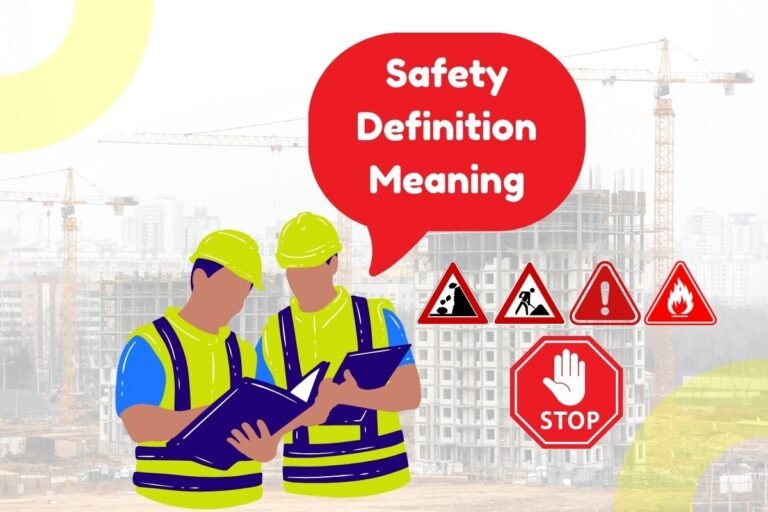
Safety Definition
Safety is the condition of being protected from harm, injury, or loss. In the workplace, safety means identifying hazards, controlling risks, and taking appropriate measures to prevent accidents, injuries, property damage, and other unwanted events.
Why safety matters
The human reason for construction safety is straightforward: every worker has the right to return home safely at the end of the day. A fall, crushing injury, electrocution, collapse or vehicle strike can permanently alter the lives of workers, families and communities.
Safety also matters to the success of a project. Incidents can cause:
- Loss of life or serious injury.
- Delays while work is stopped and investigations are conducted.
- Damage to machinery, materials and completed structures.
- Higher insurance, compensation and legal costs.
- Reduced productivity and workforce morale.
- Reputational damage for contractors, developers and clients.
A safe site is often a more efficient site. Workers who understand their tasks, use properly maintained equipment and operate in an organised environment are less likely to make errors, damage materials or lose time to preventable disruptions.
Common construction hazards
Construction sites contain many hazards, often occurring at the same time. Risk increases when schedules are tight, subcontractors work in close proximity or site conditions change without clear communication.
Falls from height
Falls remain among the most serious construction risks. Workers may fall from scaffolds, ladders, roofs, formwork, open edges, floor openings or elevated platforms. Objects dropped from above can also injure people working below.
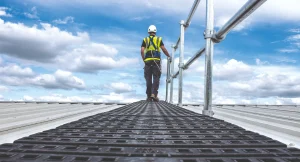
Effective controls include properly designed and inspected scaffolding, guardrails, covered openings, safe access routes, fall-arrest systems where needed, and exclusion zones beneath overhead work. Ladders should be used only for short-duration, low-risk tasks when safer access equipment is not practical.
Moving vehicles and machinery
Excavators, cranes, forklifts, dump trucks and other mobile plant can cause severe injuries when workers enter blind spots or when traffic routes are poorly controlled. Reversing vehicles are particularly dangerous.
A site traffic-management plan should separate pedestrians from plant wherever possible. Clearly marked walkways, barriers, trained banksmen or spotters, speed limits, reversing alarms and daily equipment inspections reduce the likelihood of a strike incident.
Excavations and trench work
Trenches can collapse suddenly, burying or trapping workers. The risk rises after rain, vibration from nearby machinery, changes in soil conditions or when heavy loads are placed near the edge.
Before entry, excavations should be assessed by a competent person. Protective systems may include shoring, shielding, benching or sloping, depending on ground conditions and the depth of the excavation. Workers also need safe entry and exit points, and excavations should be protected from water accumulation and falling materials.
Electrical hazards
Temporary wiring, portable tools, damaged cables, overhead power lines and unfinished electrical systems can expose workers to shock, burns or fatal electrocution. Electricity may be invisible, but it is never harmless.
Safe practice includes isolating power before work begins, locking out and tagging energy sources, using tested equipment, keeping cables away from water and traffic, and maintaining safe clearance from live overhead lines. Only trained and authorised personnel should work on electrical installations.
Lifting operations
Cranes and hoists can lift heavy loads efficiently, but failure in a lifting operation can be catastrophic. Loads may fall because of incorrect rigging, overloading, poor communication, unstable ground or mechanical defects.
Every significant lift should be planned. Operators, riggers and signalers must be competent, lifting equipment must be inspected, and exclusion zones should keep people away from suspended loads. No worker should stand beneath a load being lifted.
Hazardous substances and dust
Construction workers may encounter silica dust, asbestos, welding fumes, solvents, paints, cement, fuel and other hazardous substances. Some dangers cause immediate effects, while others—such as long-term dust exposure—may lead to chronic illness years later.
The first step is to eliminate or substitute hazardous materials where possible. When that is not possible, employers should use engineering controls such as wet cutting, local exhaust ventilation and enclosed processes. Respiratory protective equipment is important, but it should not be the only control.
Building a safety culture
Rules and personal protective equipment are essential, but they are not enough on their own. Strong construction safety depends on culture: the shared belief that no deadline, cost target or production pressure is more important than preventing harm.
Management must demonstrate this commitment through visible actions. Site leaders should conduct regular inspections, correct unsafe conditions quickly, provide adequate resources and avoid rewarding speed at the expense of safe practice. Workers, in turn, should be encouraged to report hazards, near misses and unsafe behaviour without fear of blame or punishment.
A near miss is especially valuable information. If a worker narrowly avoids being struck by a reversing vehicle, the event should be investigated even though no injury occurred. The goal is to learn what failed and fix it before the next event has more serious consequences.
Safety professionals often approach risk by asking three practical questions: what could go wrong, how likely is it, and what would the consequences be? That process helps teams prioritise hazards and select controls that reduce risk to an acceptable level.
The hierarchy of controls
The most effective safety systems do not rely solely on workers being careful. They control hazards as close to their source as possible. A useful approach is the hierarchy of controls:
- Elimination: Remove the hazard entirely. For example, assemble components at ground level rather than requiring work at height.
- Substitution: Replace a dangerous method or material with a safer alternative.
- Engineering controls: Use physical protections such as guardrails, machine guards, barriers, ventilation or trench shields.
- Administrative controls: Apply safe-work procedures, training, permits, schedules, warning signs and supervision.
- Personal protective equipment: Use helmets, safety footwear, gloves, eye protection, hearing protection, high-visibility clothing and harnesses where required.
Personal protective equipment is vital, but it is the final layer of defence. A hard hat may reduce injury from a falling object, but it does not remove the danger of unsecured materials overhead. The better solution is to prevent the object from falling in the first place.
Training and communication
Construction workforces are often diverse, including new workers, experienced tradespeople, temporary labourers and subcontractors. Clear communication is therefore essential.
Every worker should receive a site induction before beginning work. The induction should explain emergency arrangements, traffic routes, welfare facilities, reporting procedures, restricted areas, required protective equipment and major site-specific risks. Daily toolbox talks can reinforce the most relevant hazards before work begins.
Training must be practical, understandable and appropriate to the task. It should include demonstrations, supervised practice and checks that workers have understood the instructions. Where literacy or language may be a barrier, visual signs, translated materials and hands-on instruction can be more effective than written documents alone.
Responsibilities on site
Safety is a shared responsibility, although the duties differ by role.
Employers and principal contractors should provide safe systems of work, competent supervision, training, suitable equipment and a well-maintained work environment. They must coordinate activities among contractors and ensure that changing risks are communicated.
Supervisors should plan tasks, verify that controls are in place, stop unsafe work and ensure workers understand the method of work. They are often the link between written safety procedures and real conditions on site.
Workers must follow training, wear required protective equipment, use tools correctly, report hazards and avoid actions that could endanger themselves or others. They should never continue with a task that appears unsafe simply because they feel pressured to meet a deadline.
Clients and designers also influence safety. Decisions made during design—such as access for maintenance, material choice, sequencing and prefabrication—can remove hazards before construction begins.
Emergency readiness
Even with strong prevention measures, construction sites must be ready for emergencies. Plans should cover fires, medical incidents, falls, collapses, chemical spills, extreme weather and evacuation.
Emergency arrangements should identify:
- Site access for ambulances and fire services.
- Muster points and evacuation routes.
- First-aid facilities and trained first-aiders.
- Emergency contact numbers.
- Procedures for reporting and responding to incidents.
- Rescue plans for workers using fall-arrest systems or working in confined spaces.
A rescue plan is particularly important for work at height. A suspended worker may be injured or unable to self-rescue after a fall, and prolonged suspension can itself become a medical emergency. Relying only on emergency services without a site-specific rescue plan may cost critical time.
Conclusion
Construction safety is not an obstacle to progress; it is a foundation for sustainable progress. The best projects are not simply completed on time and within budget. They are completed without preventable injury, illness or loss of life.
A safer construction site begins with careful planning and continues through competent supervision, worker participation, effective training, proper equipment and the willingness to stop when conditions are unsafe. When every person on site understands that safety is a shared responsibility, the industry can build the structures society needs while protecting the people who build them.