Main Points
- Helmets keep workers safe from things that could fall on them.
- They make head accidents less likely.
- They protect against burns and electric shocks.
- Helmets make sure that safety rules are followed.
- High-visibility hats help people see workers better.
- These things protect you from bad weather.
- Helmets help people know what their jobs are.
Safety helmets, also called “construction helmets,” are very important for workers in construction, factories, and other dangerous places. These helmets protect workers from a wide range of dangers that can happen on the job site. They are the first line of defense against injuries and accidents that could be life-threatening. Because these places have a lot of different risks, wearing a building helmet is not only good for your own safety, but it’s also required by law in many fields.
What is a Safety Helmet?
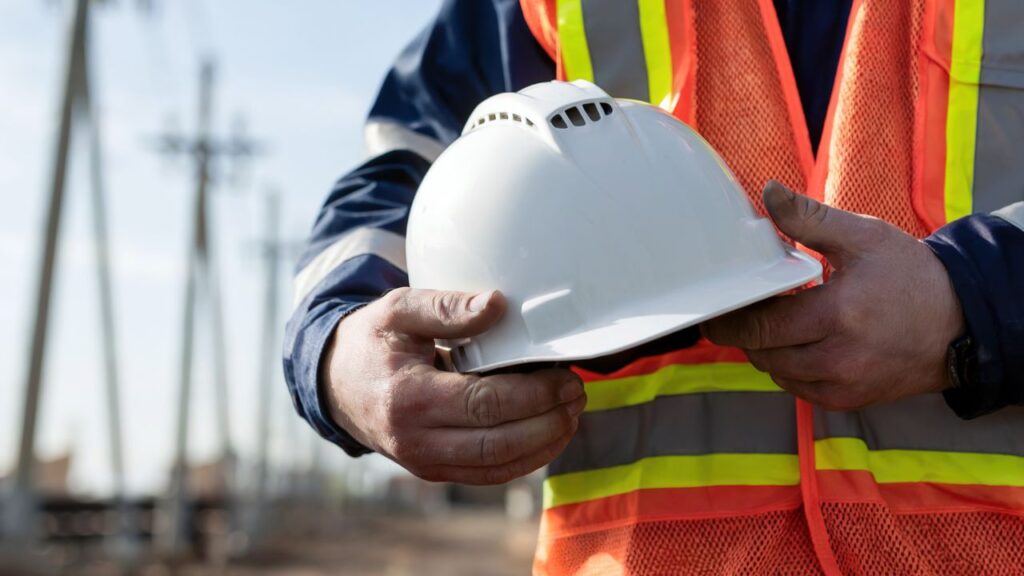
The standard hard hat has been replaced by the safety helmet, which is made to protect workers better and have extra features for places with a lot of risk. In contrast to hard hats, which only protect the top of the head, safety helmets protect both the top and sides of the head from strikes. A lot of them also have chin straps that keep the helmet in place in case of an accident or fall.
More and more people are wearing safety helmets on the job because they can be paired with many different extras, like visors, face shields, and hearing protection. They are also a good choice for workers who need extra protection in fast-paced settings because they are more stable and have a more streamlined design.
What does a hard hat do?
A hard hat is a type of protective helmet that is usually worn by building and factory workers to keep their heads from getting hurt. Hard hats have been standard in the business world for more than 100 years. They are made to protect you from falling items, debris, and other dangers. They are usually made of strong materials like high-density polyethylene (HDPE), and when they get hit, the force is spread out by a support system. As well as providing reliable protection, hard hats can be changed to fit different needs on the job site by adding face shields, visors, and earmuffs, among other things.
But standard hard hats have some flaws, like not having side impact protection or chin straps, which can make them fall off during accidents. Even though safety caps with more advanced features are becoming more popular, hard hats are still a more basic and cost-effective choice for many jobs, especially in places with fewer risks.
Why did OSHA change things?
The change from traditional hard hats to modern safety helmets was made by OSHA to protect workers better and keep up with changing safety needs on the job. Electrocutions and head injuries were responsible for a lot of accidents at work, so OSHA knew that hard hats had some problems, like not protecting against side impacts and falling off without chin straps.
Safety helmets protect your head better, fit securely with chin straps, and work with current safety gear like goggles, face shields, and communication systems. This change is due to better helmet design and materials, which helps OSHA keep up with changing safety needs on the job.
7 Key Benefit – Why wearing a construction helmet at work is important
1. PROTCTION FROM FALLING OBJECT
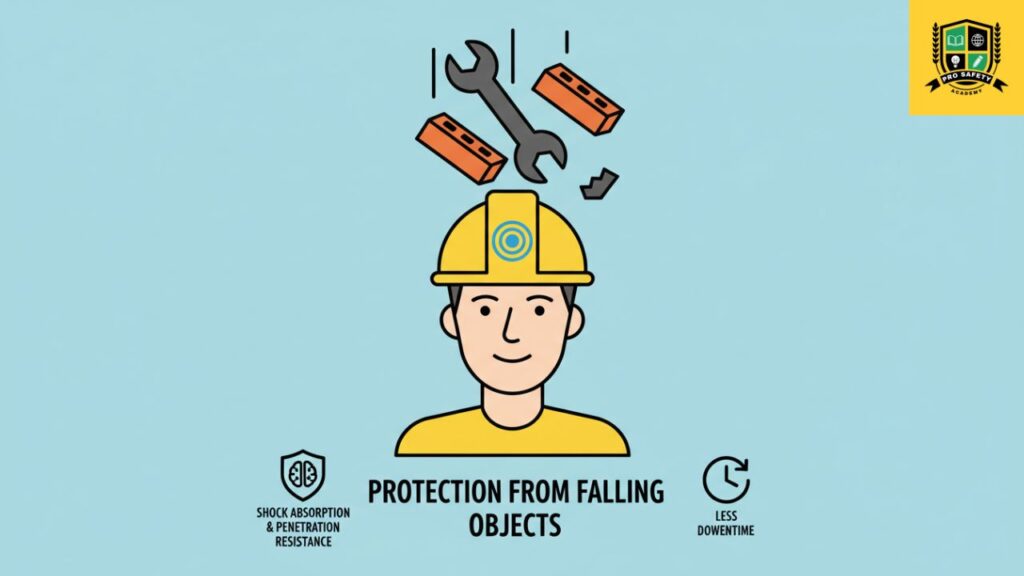
A lot of people are working on construction sites, and they do their jobs at different heights and levels. One of the most common risks on these kinds of places is that things could fall. There is a good chance that something will fall from a high place, whether it’s tools, trash, or building materials.
Key Advantages of Being Safe from Falling Objects
- Absorption of Shock: The main job of construction helmets is to lessen the effect of falling objects by absorbing the shock before it gets to the head.
- Protection Against Penetration: Good helmets can also protect against penetration from heavy or sharp items, keeping the worker’s head safe.
- Less Downtime: When building workers wear helmets, they are less likely to get seriously hurt. This means that accidents cause less downtime and projects stay on track.
2. PROTECTION OF H INJURIES
Construction helmets are very important for keeping your head safe from many types of accidents. Based on information from the U.S. Bureau of Labor Statistics, head injuries made up about 6% of non-fatal workplace accidents that caused days off in 2020.
About 20% of these injuries were caused by slips, trips, or falls, and almost half of them happened when workers touched tools or other things. This shows how important it is to wear a building helmet to avoid getting hurt and the financial and operational problems that come with workers being off the job for too long.
Types of Head Injury
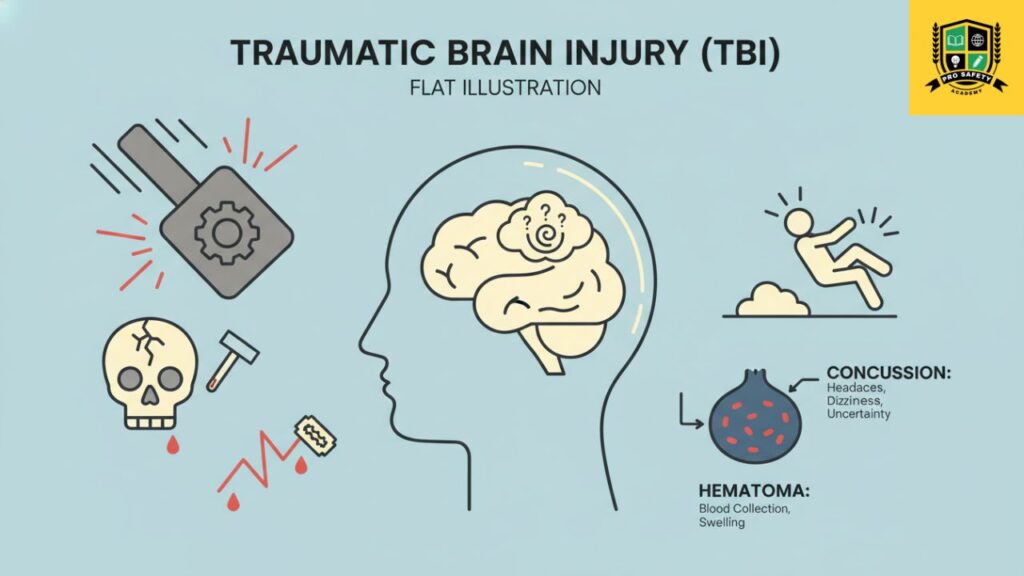
- Traumatic brain injury (TBI): An injury to the brain caused by a serious blow that affects the person’s ability to think or move. Often happens when someone is hit by heavy things or machines.
- Concussions: Some people get concussions, a mild form of TBI, when they fall or hit their head. Headaches, dizziness, and uncertainty are some of the symptoms.
- Skull Fractures: Some people break their skulls when they take hard hits, like when they fall or get hit by something.
- Scalp Lacerations: head lacerations are cuts in the head that are caused by sharp objects or tools. They can cause blood loss and an infection.
- Concussions: Head injuries called concussions happen when the brain gets hit directly, usually when someone falls or is hit by something.
- Hematomas are collections of blood outside of blood vessels that can happen after a blow to the head and could lead to brain swelling or bleeding.
3. Safety from electrical hazards
Certain types of construction helmets are made to protect workers from electrical currents in places where they might be exposed to them, like building sites where electrical work is being installed or fixed. Workers can get electrical shocks if they touch live wires or other electrical dangers, but these helmets protect them from that. Because 7.2% of work-related deaths in building are caused by electrocution, it is very important to wear the right head protection.
Important parts of protecting against electrical hazards
- Materials That Don’t Conduct Electricity: Construction hats made of materials that don’t conduct electricity keep workers from getting shocked or burned.
- Class Ratings: Helmets are grouped by how well they protect against electrical hazards. This makes sure that the right amount of protection is used for each job.
- Class G, or “General,” covers low-voltage electrical risks up to 2,200 volts and is good for moderate-risk settings.
- Class E (Electrical): Protects against high voltage up to 20,000 volts, making it perfect for people who work in high-voltage places like on electrical lines.
4. Compliance with Safety Regulations
Safety rules and standards must be followed in many fields, especially in the energy, manufacturing, and construction businesses. The Occupational Safety and Health Administration (OSHA) and other regulatory bodies make strict rules that everyone working on a building site must wear a helmet. OSHA rules make sure that workers have the right safety gear to keep them from getting hurt, and it is the managers’ job to make sure that these rules are followed.
- Type I head protection is made to protect against blows to the top of the head.
- Head protection of Type II protects against blows to the top and sides of the head.
5. Improved Visibility
Being able to see well on the job site can help keep accidents from happening. To lower the risk of getting hurt, workers who are using big equipment or moving around in crowded areas need to be easy for others to see. It is easier for people to see construction workers from far away when they are wearing hats that are bright and stand out. This is especially true when it is dark or raining.
Benefits of High-Visibility Helmets
- Why high-visibility helmets are good for preventing accidents: High-visibility helmets make workers easy to spot, which lowers the chance of accidents or crashes.
- Safety at Night: Helmets with shiny strips or bright colors are especially important for people who work at night or in places with low lighting.
6. Protect from the weather
A lot of the time, construction workers have to deal with harsh weather, like high heat, freezing cold, or heavy rain. Not only do construction hats protect you from physical harm, they also protect you from the weather.
Features for weather protection
- UV Protection: Some helmets are made with materials that stop UV rays, which keeps workers from getting sunburned or overheated.
- Water Resistance: Workers stay dry and comfortable even when it’s raining when they wear helmets that are water-resistant.
- Insulation: When working in cold places, hats may have insulated linings that keep workers warm and let them focus on the job at hand.
7. Identification of Roles
Figuring out who does what: People who wear construction helmets can also be easily told what their jobs are by looking at their helmets. Different colored or marked helmets can help tell the difference between supervisors, electricians, engineers, and other skilled workers. This makes it easier to assign tasks and make sure the right person is called in for each job.
Different Helmet Colors and What They Do
- White: The white worn by supervisor, managers, leaders, engineers, and foremen.
- Yellow: This color is usually worn by general workers and people who move dirt.
- Blue: This color is usually given to skilled workers like electricians and carpenters.
- Green: For safety officers or new workers (trainees), the green color is often reserved.
- Red: This color is usually worn by fire guards and other safety workers.
- Orange: Road crews and people who drive heavy machines wear this color to be seen.
- Brown: Only for welders and people who work in places with a lot of heat.
- Gray: Often used by visitors to job sites.